


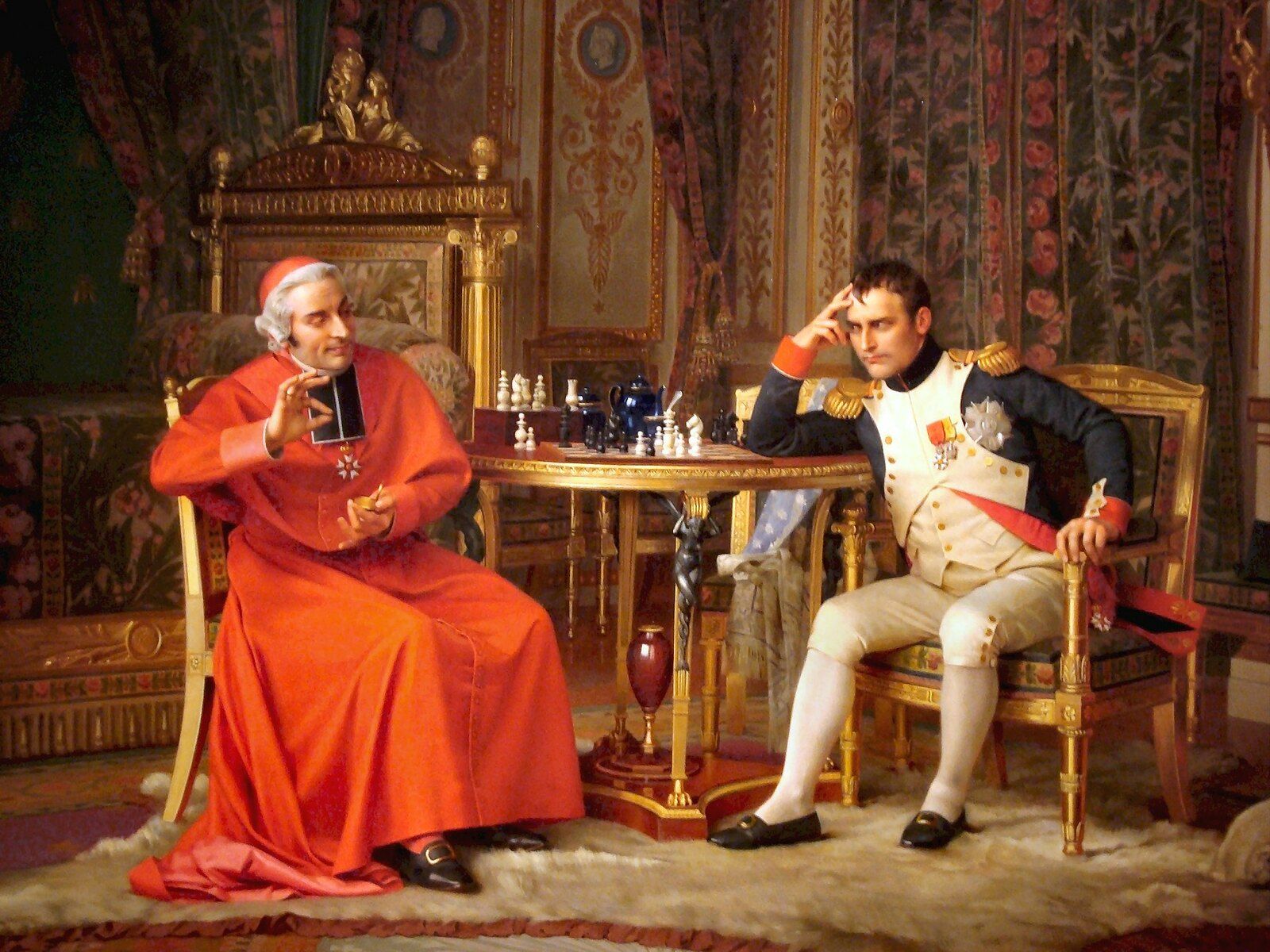
Napoleon Bonaparte, Chess Player
A strategic game par excellence, an elegant symbol of the art of war, chess has been the king of games and the game of kings since the Middle Ages. Napoleon Bonaparte could not remain indifferent to it without, however, and it is surprising, never becoming a brilliant player!
Napoleon, a Bad Sport
If Napoleon Bonaparte often arouses blissful enthusiasm or blind hatred, no one seems to question his strategic genius. Of course, such a talent would seem to find in the peaceful and regular practice of the game of chess the exaltation of this remarkable strategic mind. However, it is not. Napoleon certainly learned the rules of chess when he was a pupil at Brienne; this game was indeed one of the many qualities that good society deemed necessary for a young man. While settling in Paris, the “petit lieutenant” comes to practice “pushing wood” at the Café de la Rotonde or at the very popular Café de la Régence, haunt of the best chess players since the middle of the Eighteenth century.
The revolutionary period, tasting little of the central role accorded to the King’s play, had kept chess in the shade for a few years, reworking its form without changing its substance so that the game espoused the republican cause. But the craze – never extinguished – for the traditional form soon returned and Napoleon was not indifferent to it. Until the young lieutenant had yet dazzled France with the meteoric Italian campaign, no one pay interest to its play on the chessboard. Nonetheless, had he shown the extent of his military genius on Italian soil, it was imagined that he was just as formidable leaning on a gaming table. He was not.
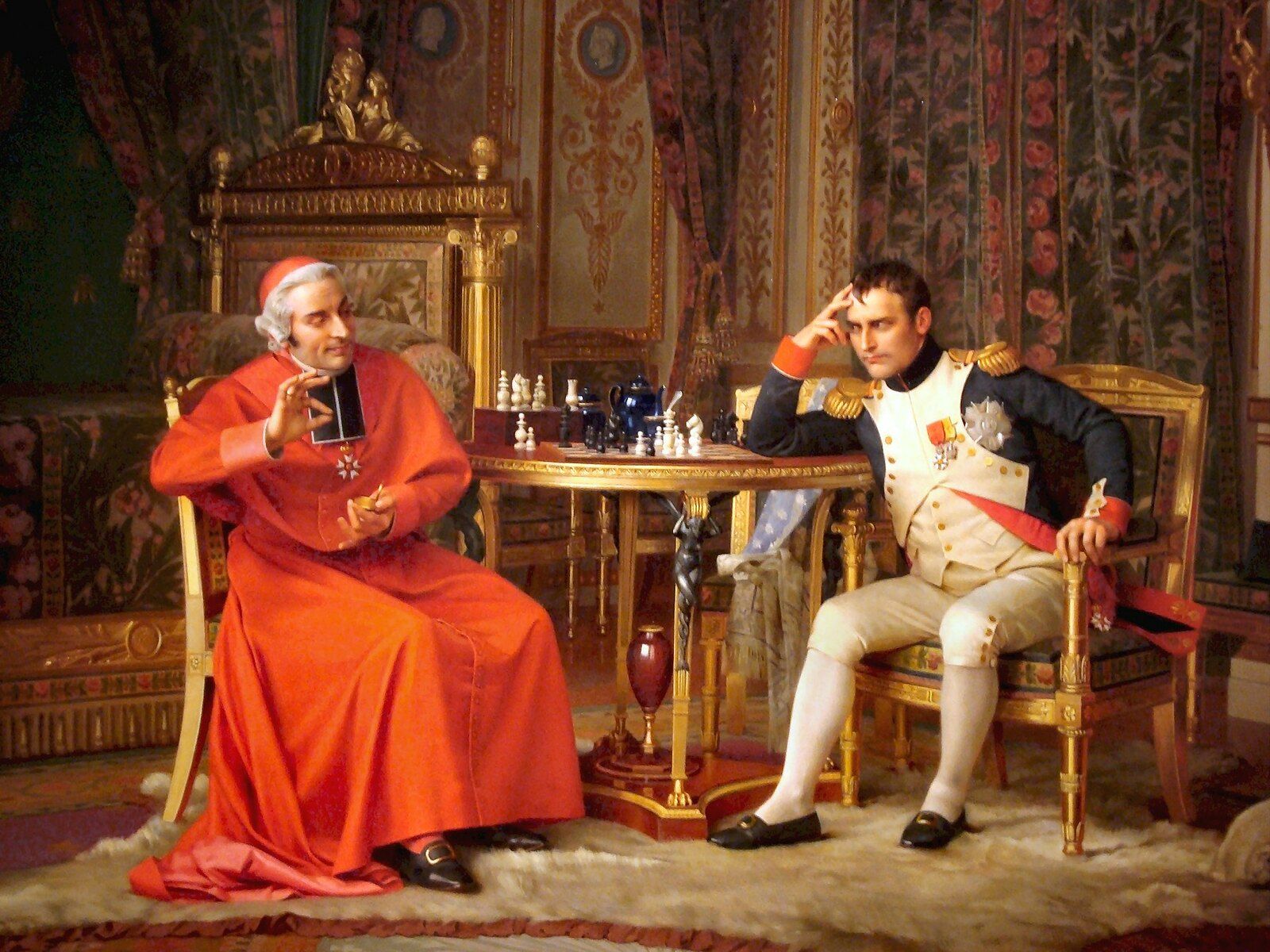
First, let us note that the conception of chess at the turn of the 18th century was very different from today. The strategic theory and the preparation of the attacks were almost nil and the direction of positioning hardly considered. One wanted to shine on the chessboard with the same brilliance as the final assault of a Homeric battle. The games were aggressive and the attacks started quickly without hesitating to sacrifice pieces and pawns for a spectacular checkmate. Nevertheless, circles of amateurs and champions gradually took shape, treaties multiplied and strategy developed. François-André Danican Philidor, nicknamed “the Great” (1726 – 1795), undoubtedly the best player of his time, was also the first to shake up the intuitive and imaginative vision of chess by writing one of the very first treatises on the game.
Probably Napoleon’s way of playing was borrowed from the old and the new manner. But where the future First Consul shone and knew how to use his talent, he lost his advantage on the chessboard. Indeed, on each side of the board, the opponents face the same field and are in possession of the same squad information. In this case, it was impossible for Bonaparte to take advantage of the natural terrain, impossible to bluff on the number of soldiers per contingent. On the chessboard, the two opponents are on equal ground; the strategy and the inventiveness to be deployed are not the same as in real war. Journalist and writer Jean-Claude Kauffmann sums up the game attributed to Napoleon:
The strategist of Austerlitz and Friedland who considered the battlefield a chessboard was a poor chess player. He naively rushed at the opponent and was easily captured, which did not prevent him from brazenly cheating.
Bonaparte was cheating. It’s a well-known fact and not just in chess! We know his impatient and sometimes (often?) difficult character, it is quite easy to imagine him as a bad player. Perhaps he would have been better – at chess anyway – if he had had the opportunity to study the game better. This great reader might not have had the opportunity to look at the treatises newly published. All his life he loved this game without being a top player.
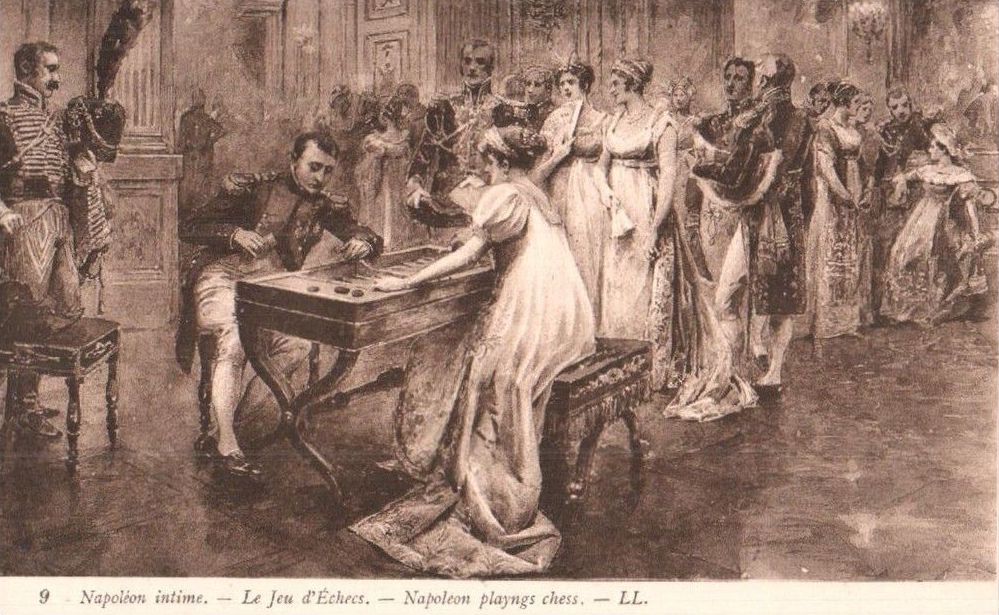
In Egypt, he played with the Comptroller of Army Expenses Jean-Baptiste-Etienne Poussielgue (1764 – 1845) and with Amédée Jaubert (1779 – 1847), member of the Commission for Science and the Arts and translator. In Poland, it was with Murat (1767 – 1815), Bourrienne (1769 – 1834), Berthier (1753 – 1815) or the Duke of Bassano (1763 – 1839) that he played chess. Like a close friend, Bourrienne testifies with sincerity to Bonaparte’s game while Hugues-Bernard Maret, Duke of Bassano goes there with a touch of flattery:
Bonaparte also played chess, but very rarely, and this because he was only a third force and he did not like to be beaten at this game. He liked to play with me because, although a little stronger than him, I was not strong enough to win him always. As soon as a game was his he would quit the game to rest on his laurels.
Louis Antoine Fauvelet de Bourrienne, Mémoires
The Emperor did not skillfully start a game of chess. From the start, he often lost pieces and pawns, disadvantages his opponents dared not take advantage of. It wasn’t until the middle of the game that the right inspiration came. The melee of the pieces illuminated his intelligence, he saw beyond three to four moves and implemented beautiful and learned combinations.
Hugues-Bernard Maret, Duke of Bassano
Probably the Duke will have seen the Emperor’s game on a good day … Unless he was dazzled by the pomp more than the game! Because Napoleon Bonaparte was not the type, one would have suspected, to easily accept defeat. In addition, he was impatient, stamped his foot or drummed on the table when he judged his opponent too slow, which did not fail to disturb the arrangement of the pieces on the board … Whether his opponent was human or mechanical, his attitude was the same. A certainty acquired during this famous episode that we never tire of telling.
In July 1809 at Schönbrün Palace in Vienna, a historic chess game was about to take place. Setting up the chessboard and one of the two opponents is laborious; and for good reason: it is about installing an automaton. Imagined and manufactured by Baron Wolfgang von Kempelen (1734 – 1804), this mechanical “Turk” has already played games with some of the world’s greats, including Catherine the Great (1729 – 1796) or even Benjamin Franklin (1706 – 1790) while the automaton was at the Café de la Régence in Paris in 1783.
In 1809 however, the learned machine no longer belonged to the baron but to Johann Nepomuk Mälzel (1772 – 1838) but still aroused enthusiasm (as well as suspicion, a very natural feeling which would later be legitimized). Napoleon Bonaparte accepts the confrontation with the automaton. The game was chaotic because the automaton seemed perfectly capable of recognizing a cheater when it saw one! So the Turk would put a pawn or a piece in its place as soon as his opponent tried to cheat. A nasty twist that Bonaparte had no qualms about facing the machine. But, the annoyed automaton systematically swept the chessboard with his arm after three fraudulent attempts which, of course, did not fail to happen with the Emperor. The Mechanical Turk thus defeated Napoleon I by disqualification.
In 1834, the deception was exposed. The automaton was endowed with no mechanical intelligence. A set of mirrors and articulated arms allowed a small player to crawl under the automaton and the board and play brilliantly against all the prestigious opponents he faced. Either way, it must nevertheless be recognized that this (or these?) player, as anonymous as he was, was one of the best chess players of the time!
Napoleon at Saint Helena
In 1815, Napoleon Bonaparte was exiled to Saint Helena, an island as remote from Europe as the temper of the fallen Emperor. Bonaparte’s unrestrained and permanent activity contrasted with the imperturbability of this isolated rock, one may almost believe that by dint of work Napoleon would be able to make it move. Obviously, one tried to recreate a refined environment, however, the Empereur never fear the Spartan life. Days were often studious but almost every day Napoleon loved to play chess. The 19th-century grandiloquence of the gaming journal, La Palamède, reflects Napoleon’s still strong taste for the chessboard:
If the game of chess had not already attained a high nobility, it would be ennobled by giving a few moments of happy entertainment to the greatest of prisoners and exiles.
La Palamède, 1836
A poetic assertion quickly disheartened by Las Cases :
He was infinitely weak at chess.
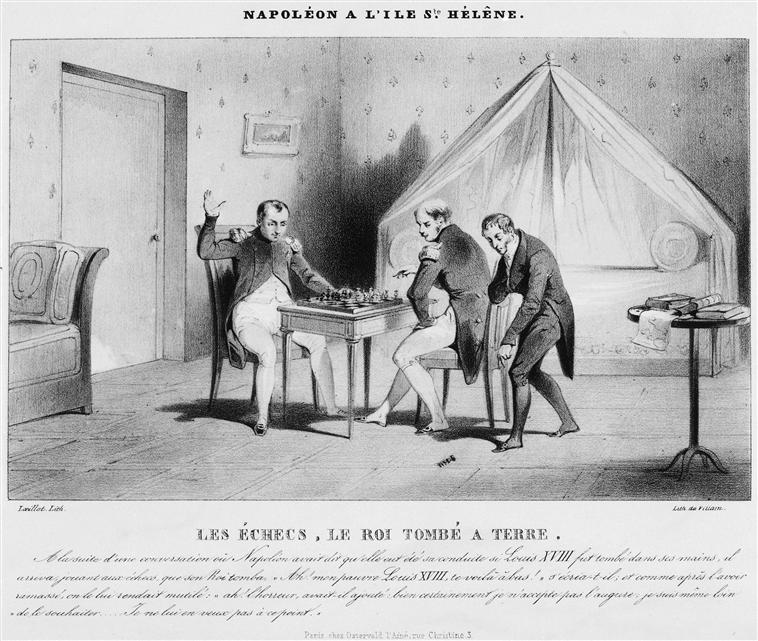
It’s a safe bet that Napoleon did not win many games! Especially since Madame de Montholon, who attended many parties during the exile, added that:
Touch-move rule, but it was only for his opponent. For him [Napoleon] it was different and he always had a good reason why it didn’t matter, if anyone notices it, he would laugh.
At least the island air seemed to have softened his bad sport character (in chess at least)!
Upon his hasty departure from France, we know that a chess board was carried in the luggage. Nevertheless, Napoleon Bonaparte had at his disposal during his stay at least two Chinese chessboards, one of which was offered to him by… an Englishman.

On July 4, 1817, boxes from China destined for Bonaparte arrived at Saint Helena. In one, a beautiful chessboard and its ivory and cinnabar pieces was the gift to the Emperor from John Elphinstone. The man was then head of the Canton counter for the East India Company and with this elegant gift expressed his gratitude to Napoleon. The latter had indeed saved the life of Lord Elphinstone’s brother during the Belgian campaign in 1815 by demanding that this Scottish aristocrat seriously injured and taken prisoner be treated. The zealous gratitude expressed by the Lord pushed the detail so far as to stamp all the pieces of the game with the imperial monogram. A detail which flattered the emperor but which annoyed even more (because he was always on edge) his jailer Hudson Lowe who accepted reluctantly and after several days, to transmit his present to the illustrious French prisoner.
This gesture of Lord Elphinstone impressed Napoleon more than the game itself, the pieces of which were impressive. The tower in particular was a huge elephant which aroused Bonaparte’s amusement: « I should need a crane to move this tower! » (La Palamède, 1839).
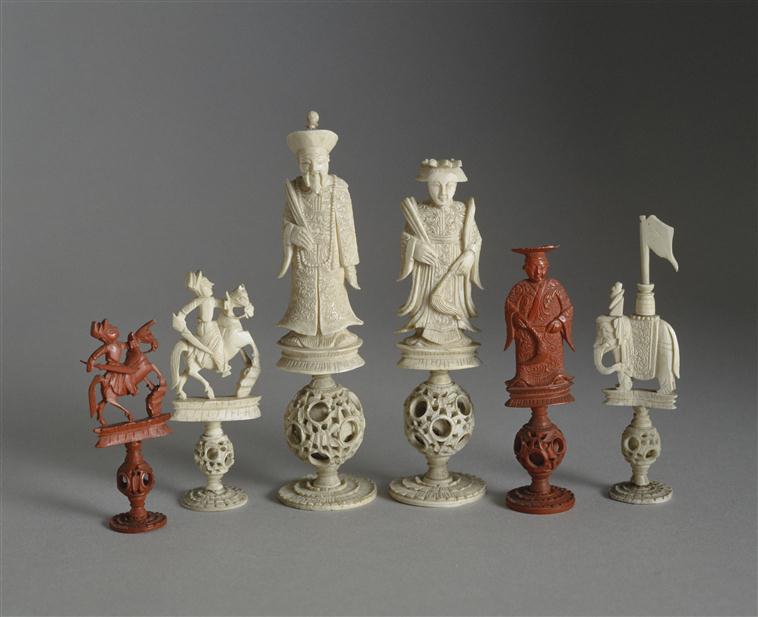
Some pieces of the various chess games he owned were distributed to his companions in exile during the New Year’s Eve. It seems that Marshal Bertrand received a few in January 1817 without it being possible to say with certainty which game it was. Today a set and a few pieces are kept in French museums and in private hands, and sometimes pieces resurface from the past at auctions. Very tenuous memories of the life, character and faults of Napoleon Bonaparte, a fine strategist on the ground but an inveterate cheater on the chessboard!
Napoleonic Wars casualties
Enthusiastic or detractor, there are many who engage in a war of numbers to acclaim or denounce Bonaparte's military operations and their cost in terms of human lives. What is it really?
Although it is difficult to obtain an exact figure, many historical studies are today consensus and allow not only to better understand the Napoleonic history but also to place it in relation to other great wars which marked France and the European continent. We will also appreciate the quality of the long, patient and referenced work of emeritus historians in the face of the epileptic and vociferous agitation of Internet users who are too happy to be freed from any academic commitment to shout a story rewritten by their care, a story whose primary quality is to travel light; in fact, these individuals rarely encumber themselves with serious bibliographic sources. That being said, it’s okay (but not always, as everyone sees on a daily basis) to use the numbers with caution. Chateaubriand accused Napoleon of having killed more than five million French people in eleven years of reign. We know the literary value of Chateaubriand’s writings, we can no longer ignore after reading such an assertion the little importance he made of learning mathematics. Because indeed, figures can say anything and everything depending on whether or not the details are given. How did Chateaubriand arrive at this figure? Impossible to say. Was he a sharp critic of Bonaparte? Did he have any complaints against him? This is no longer to prove. Can we consider as fair and objective the figures put forward without argument by a man who resented the one he accused? Maybe not. This is why the work of historians is once again capital and essential to consider calmly and as objectively as possible such a burning subject.
The death toll attributed to Napoleon’s military deployments spanned fifteen years in several countries. To suspiciously attribute several million deaths to Bonaparte is often an assumed or even claimed approximation, peremptory affirmations are always more comfortable than the complicated meanders of nuance and study. Of course, it is not a question of being naive: the Napoleonic campaigns were not walks in the park and, over fifteen years, the human losses, whatever the camp which one chooses, are considerable. But are they more so than other conflicts before (the Thirty Years War) or after (the First World War)? The response of historians tends to be negative.
Calculating French losses: laborious work
Before considering the figures put forward by historians, let us recall that before the present day, human losses were not or little counted, leaving room for partisan assumptions that were often excessively high or excessively low. Jacques Houdaille (1924 – 2007) – teacher at several American universities and director of research at the National Institute of Demographic Studies (1970-1988) – used the army personnel registers to assess Land army losses under the First Empire. His studies of historical demography are today considered the most reliable by historians and scholars of Napoleonic history. From the start of his study, he drew attention to:
A confusion, difficult to avoid, between soldiers who died in combat and soldiers who died or disappeared under the Empire [which] allowed all the more fanciful assertions since, even for the losses of the French army, it was difficult to distinguish the French born in France, within its borders of 1815, Belgians, Italians, Rhenish and Dutch born in the annexed departments between 1792 and 1811.
This gives a little insight into the difficulty, knowledge and mastery of research protocols and historical tools as well as the patience required to undertake such a study. The figure put forward by Chateaubriand quickly appears inconsistent compared to those collected by researchers. Because if 2,432,335 French were called to military service from 1799 to 1815, two million were actually conscripted (Chateaubriand’s five million are largely excessive). For France alone and based on the work of Jacques Houdaille and those of other historians, we manage to establish a high (one million dead) and low (400,000 dead) range of human losses over the cited previous period; and if the estimate is still difficult, as Thierry Lentz, the director of the Fondation Napoléon, rightly points out, it can reasonably be argued that the average range – or around 700,000 French deaths – is the closest to the truth.
European losses and losses during the great battles
This fifteen years of history obviously did not affect only the French. The European toll is also high and the average estimate tends around more or less two million dead, including the human losses of Russia (500,000 men), Prussia and Austria (500,000 men), the Poles and Italians (200,000 men), the Spaniards and Portuguese (700,000 men) and the British (300,000 men). *
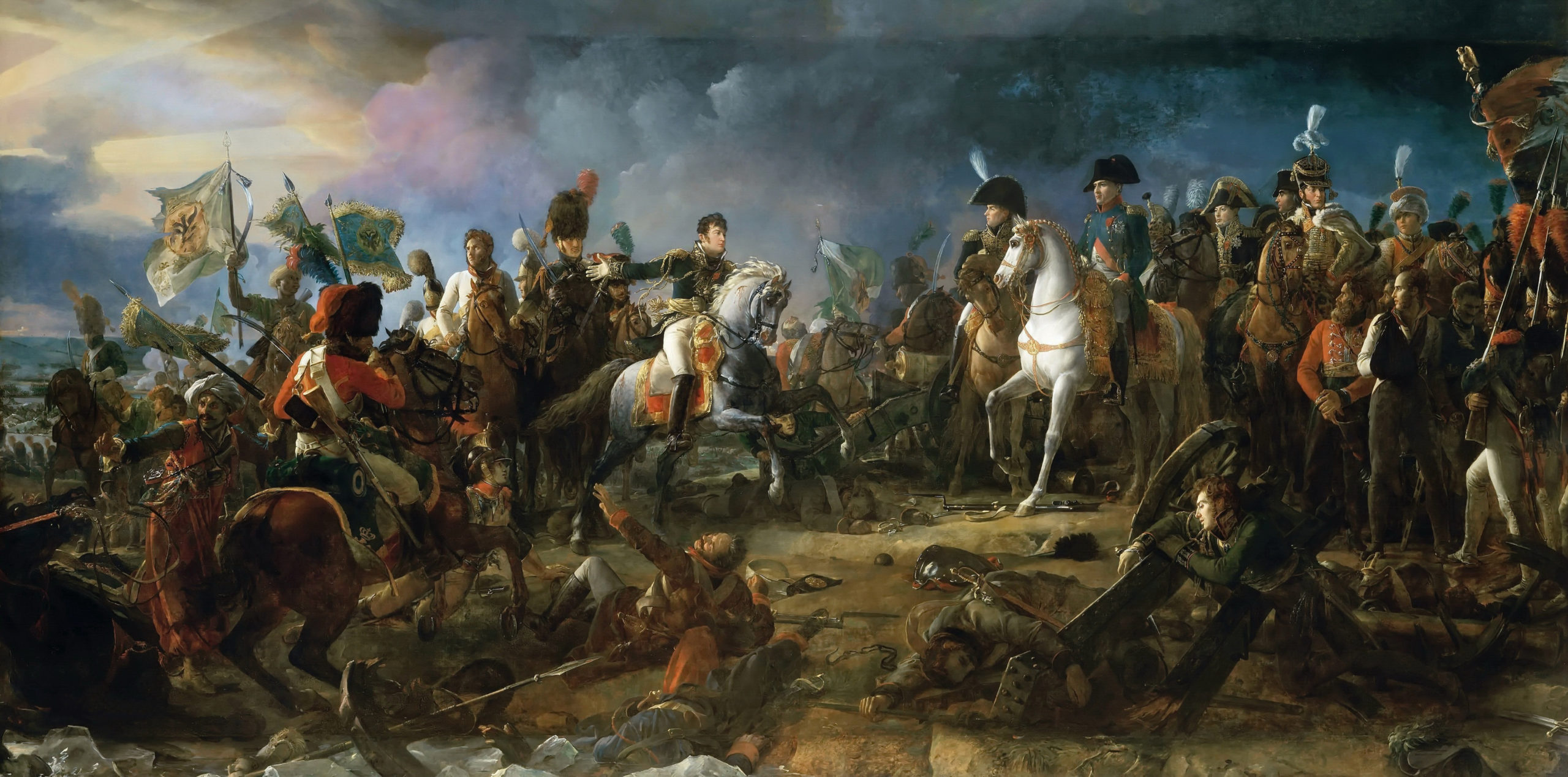
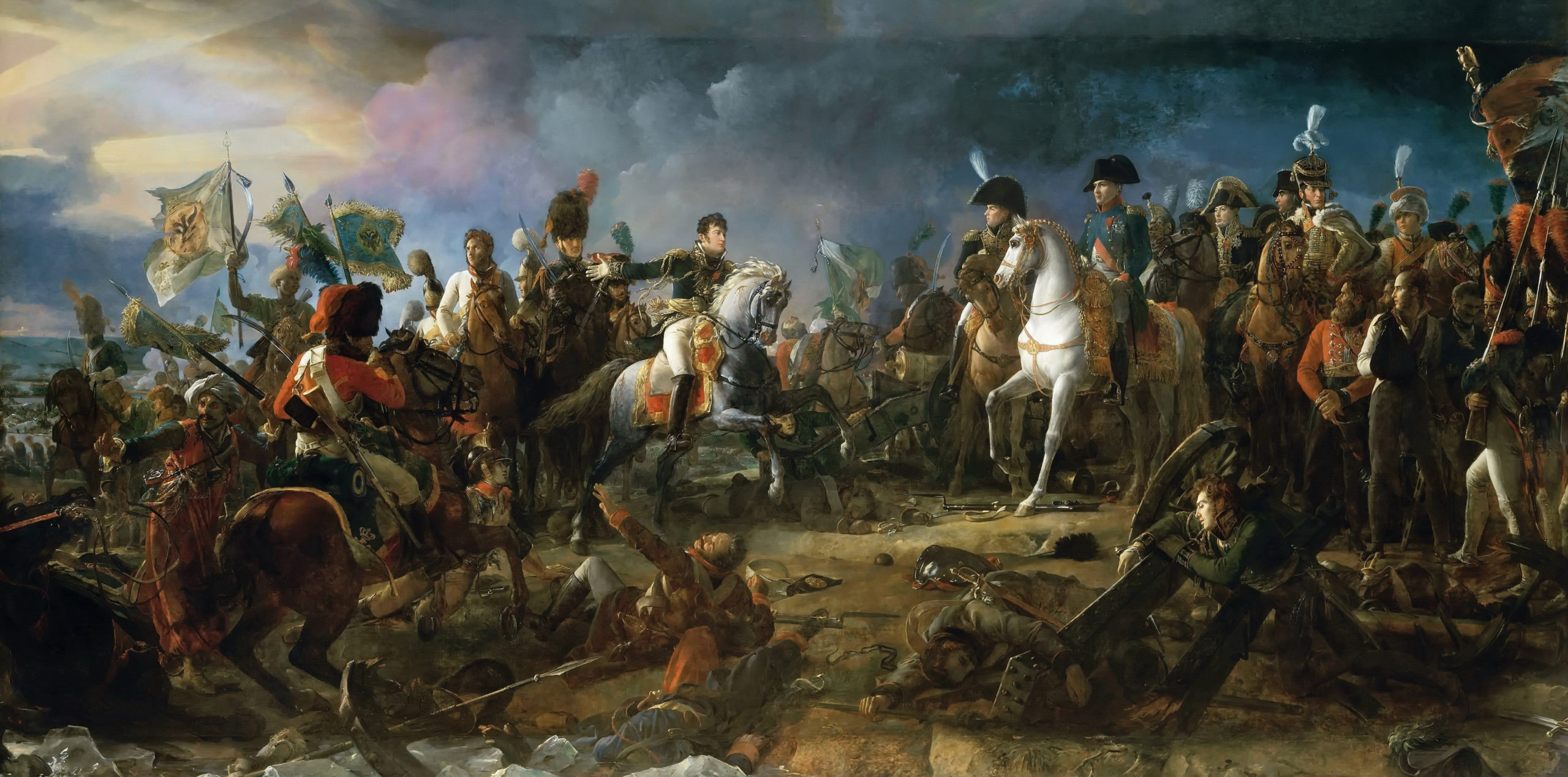
The reports are further refined thanks to the patient studies of the battles led by Danielle and Bernard Quintin ** using the method of Jacques Houdaille. Thus for the Battle of Austerlitz (December 1805), there were 1,538 dead in the French camp for 72,500 combatants, or 2.12% of the troops. In Eylau (February 1807) 2711 died and 44 presumed dead, i.e. a 5% loss, and at Friedland (June 1807) 1,849 men were killed, 68 presumed dead and 341 missing.

Of course, the loss of life is colossal and always too high, whatever the conflict. But are they more so than other wars that have ravaged Europe? Obviously no.
The Thirty Years’ War (1618 – 1648) caused nearly two million deaths among combatants and even more among civilians. There are at least five million victims for a total population of fifteen to twenty million inhabitants in the Holy Roman Empire. The First World War caused 18.6 million deaths in four years, including soldiers and civilians. Some will be offended to see us compare conflicts and their losses with regard to the demographics of each era or to the weapon technologies employed. But in this case, how do you support the idea that Napoleon Bonaparte was a power-thirsty with no regard for the lives of his soldiers? An assertion works against a referent, and in either case (in comparison or without comparison) the argument does not hold. Judging Bonaparte’s action against what our time considers the right way to act as head of the army is also unreasonable. The beginning of the 19th century is a far cry from our post WWII era. However, let us insist on this point: Napoleon Bonaparte is not a holy personage or an incarnate demon. He was an ambivalent, opportunistic and ambitious personality in a time of turmoil. Let us also remember that the Napoleonic wars are largely (not all, we insist: in large part) the continuation of the wars of the French Revolution which then responded to the attacks of the united European monarchies.
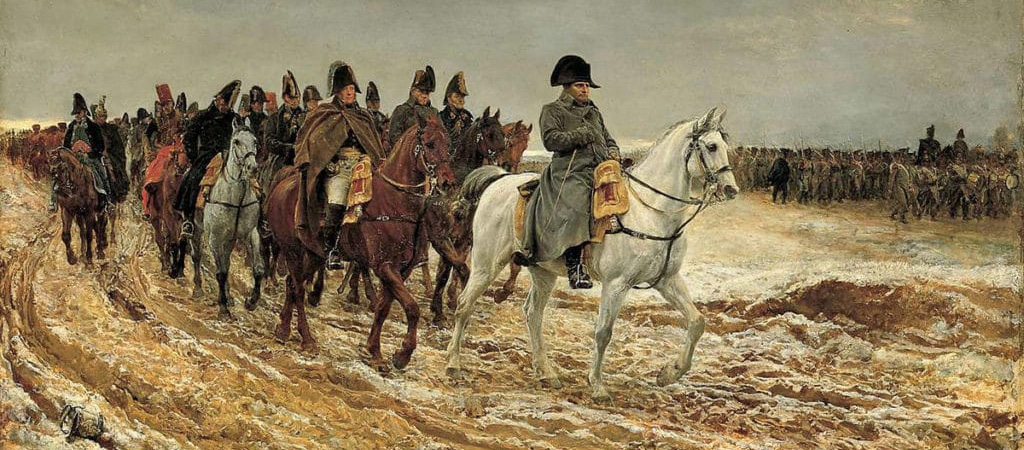
Napoleon Bonaparte cannot be credited with the invention of war nor with the complete loss of life in the conflicts of the first fifteen years of the 19th century. Although an emeritus strategist, he was recognized during his lifetime – and testimonies abounded in this direction after his death – as a man close to his soldiers, the latter appreciated and recognized his experience in the field. A quality that many military leaders will not have during the First World War, a hundred years later.
As often, this historical figure crystallizes blind partisanship or stubborn hatred, the two having in common being simplistic. As History is nuanced, so are the characters who make it up. Only the work of historians can scientifically shed light on the areas of our history; to better understand it, we must rid it of its preconceived ideas and accept to question our certainties in the light of the most serious and recent research.
[thrive_leads id=’74591′]
*Chiffres issus de l’étude de Alexander Mikaberidze, avocat et historien considéré comme un des meilleurs spécialistes étrangers du Premier Empire.
**Auteurs d’ouvrages de fond sur le Premier Empire, ils reçurent en 2007 le Prix spécial du Jury de la Fondation Napoléon pour l’ensemble de leur œuvre.


