


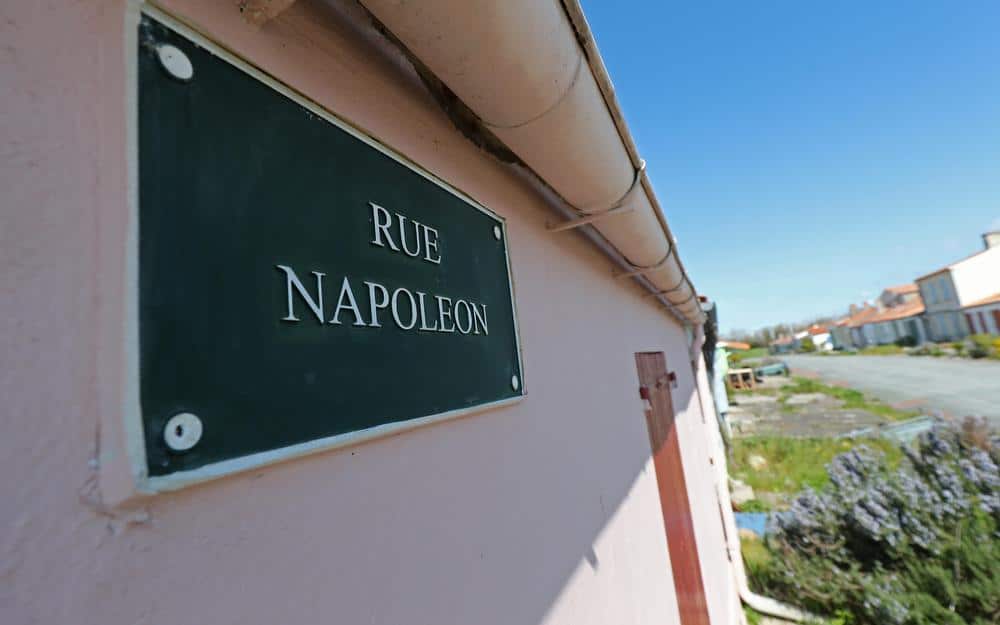
Napoleon and the Numbering of the Streets
Napoleon Bonaparte regularly demonstrated a very modern pragmatism. If our daily life owes him a lot, from the baccalaureate to garbage collection, let us recognize him for having succeeded in enforcing the numbering of buildings and houses, a challenge which exhausted the resources of many of his predecessors.
Numbering the Streets: a Long-Standing Initiative
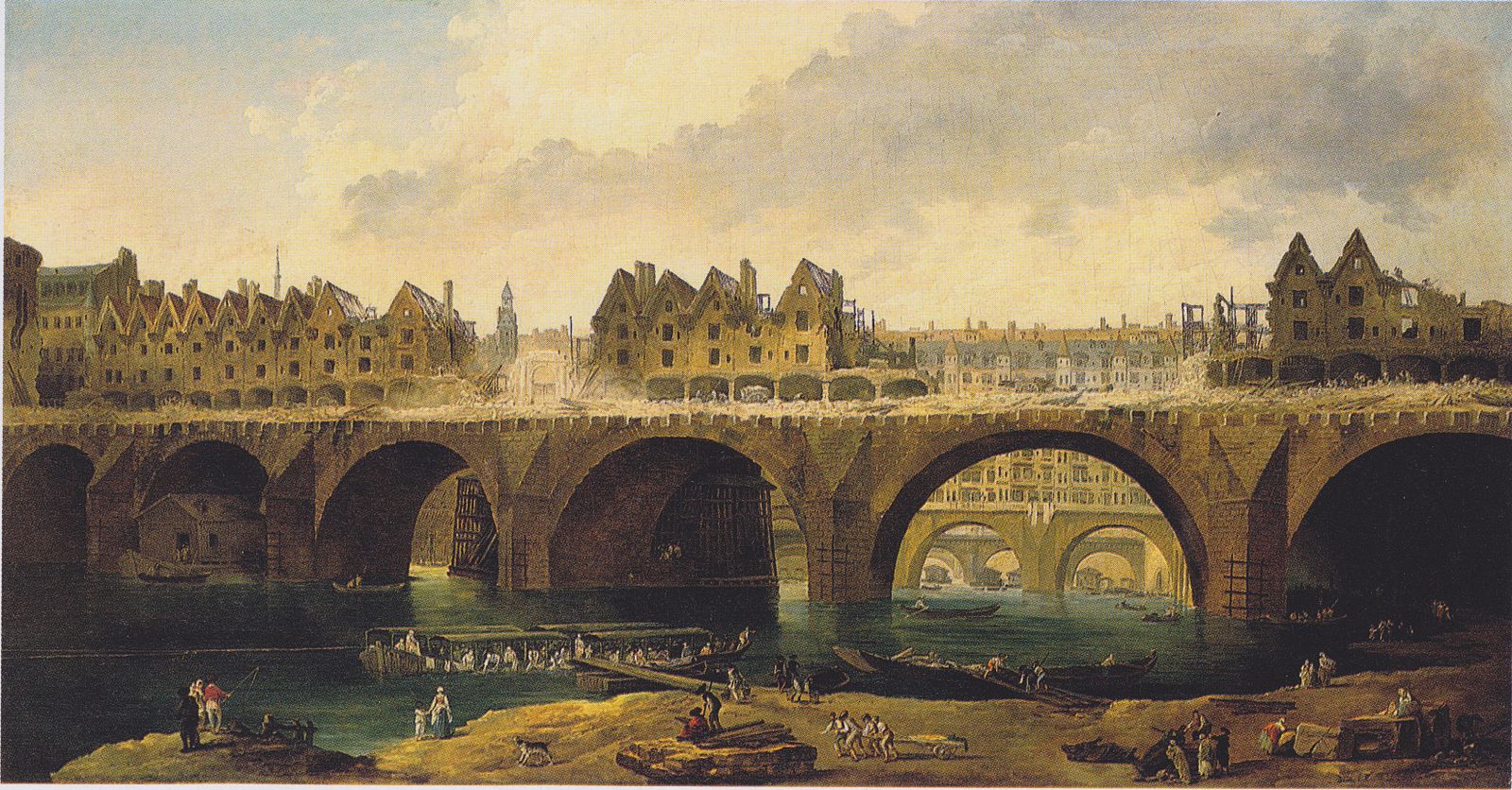
If the numbering of streets as we know it today is quite recent, the idea is nevertheless old. In 1421 in Paris, the newly rebuilt Notre-Dame bridge, made of wood on stone piles, has no less than sixty houses which will savour against their will the water of the Seine during the destructive flood of 1499. On this bridge, the dwellings are numbered in Roman numerals and are the only ones to benefit from this treatment in the city. Once at the bottom of the river, these houses will be the only memory of a numerical experience that will not be repeated for several centuries. While waiting for the Age of Enlightenment, one orients himself in the cities by following approximate itineraries articulated on landmarks that are the signs of the houses or the specificities of the district. Failing to find his way quickly, the pedestrian can at least savor the poetry of picturesque mazes with names inherited from some curious legend. So it is with the rue du Chat-qui-Pêche as well as that of the Puits-de-l’Ermite or the rue Perdue.
In the eighteenth century, especially in its second half, it seems that the taste for clarity and simpler travel directions take over and house numbering becomes common in many cities. The exercise is most often used to better collect taxes or to accommodate more easily the troops of passing or occupying armies. But the foreign visitor or the lost provincial undoubtedly enjoys – even before the inhabitants – the comfort of strolling in an unknown city without fear of getting lost because the sign serving as a landmark closed without anyone being informed. Thus the numbering of dwellings appears for example in Prussia in 1737, in Madrid in 1750, in Milan in 1786 and in Paris in 1779. Vain undertaking in the French capital because it is an understatement to specify that Parisians are reluctant to face this initiative. As you number the day, the fresh paint indications disappear at night! At a time when rumors – and the facts! – are going well and recognize in the marking of houses an indisputable sign of the imminent passage of thieves, no one is comfortable with the idea of a clearly visible numbering even though it would be generalized to all homes and without distinction of neighborhoods or social rank.
Yet the idea is gaining ground and the editors of almanacs and directories are not for nothing! It is easy to imagine the interest that such a numbering would be for them: addresses which would become precise and would need to be regularly updated so that the annual edition of almanacs and directories would turn into a particularly fruitful juicy affair. Moreover, it was on the initiative of one of these traders that the first Parisian numbering took place in 1799 and which ended in pitiful failure.

The Revolution, however, was not afraid to get to grips with the problem and concocted a system of such complexity that it was the source of particularly remarkable absurdities (numbers without continuation or the same number repeated several times in same street) and which miraculously made the system without numbering much clearer and simpler than the system being provided with numbers. All the same, Choderlos de Laclos (1741 – 1803), if he proposed a numbering system as twisted as the mind of the Vicomte de Valmont, imagined some ingenious systems such as that consisting in distributing even numbers to the streets perpendicular to the Seine and the odd numbers on the streets that ran parallel to it. If this is not quite the system set up by Napoleon I, we can recognize that he was inspired by it.
The Imperial Street Numbering System
On February 4th, 1805, a decree made street numbering compulsory. In Paris, the prefect Nicolas Frochot (1761 – 1828) is in charge of the application of this decree which is based on a system whose design was not a piece of cake!
Finally, the result makes it possible to see more clearly without creating complexities that are too crippling on a daily basis. Contrary to what Marin Kreenfelt de Storck, editor of the Almanac de Paris in 1779, advocated, the digital unit is now the house and no longer the door.
Then the numbering of the doors follows simple geographical rules capable of being applied to almost all the streets of the capital. A distinction is made between even numbers (to the pedestrian’s right) and odd numbers (to his left); the direction of the streets is oriented from upstream to downstream for streets parallel to the Seine, and from the banks to the north and south for streets oblique or perpendicular to the Seine.
Visually, the numbers are differentiated so as to facilitate understanding of the geographical position in which the pedestrian is. In the streets perpendicular or oblique to the river, the numbering is drawn in black on an ocher background while in the streets parallel to the Seine, the number is written in red, always on an ocher background.
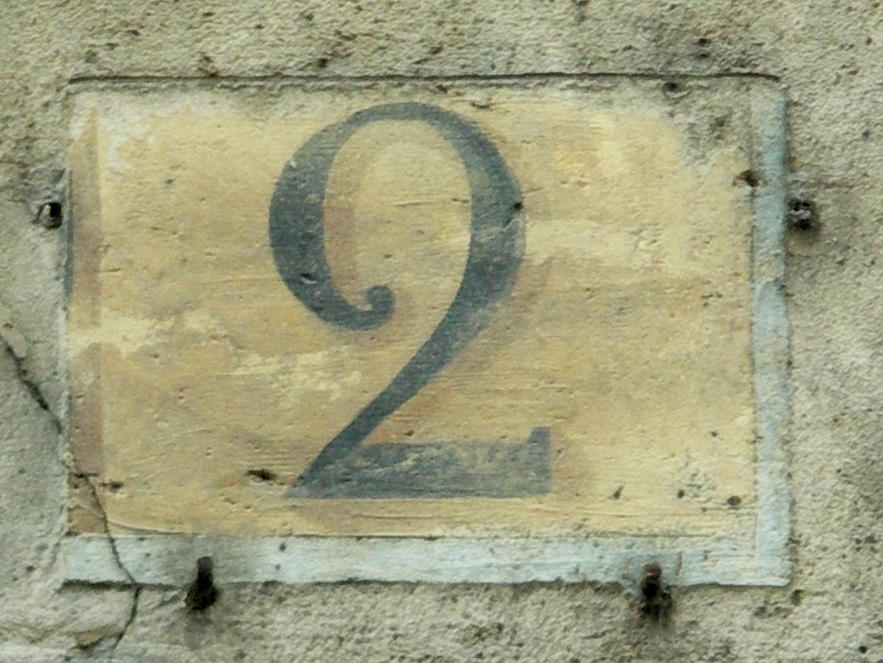
The municipality of Paris took charge between June and September 1805 of the first numbering of the streets of the city but the maintenance of these numbers – so that they remain clearly visible – fell to the owners who one imagines that they were particularly enchanted by this new measure. Painting did not last long in the Parisian climate and the local authority published then generously a specification (height, location, color and material of the plate which could be glazed sheet, enamelled earthenware) leaving the owners the choice to invest in a numbering that did not require regular maintenance .
On June 28th, 1847, the application of the decree of the Prefect of the Seine initiated a regularization of street signs and numbering by opting for enameled porcelain plaques whose white numbers were inscribed on an azure blue background always currents in Paris and in the provinces.
When the new numbering system was applied, the problem of the Cité and Saint-Louis islands arose. Since the perpendicular streets as well as the parallel streets overlooked the Seine, it was decided to assimilate the Île de la Cité to the left bank while the Île Saint-Louis was similar to the right bank. By superstition, the number 13 of certain streets was replaced by the number 11 bis and sometimes, without any reason, streets were numbered backwards.

This decree of Napoleon I changed the way of conceiving the geographical space of a city. By facilitating all kinds of procedures, street numbering still makes it possible to move around quickly, without wasting time. Ironically, few streets named after Bonaparte allow the decree of February 1805 to be linked to its instigator. Rue Bonaparte in the 6th arrondissement of Paris evokes more the memory of the general than that of the emperor, while the quai Napoleon from 1804 is now divided into two parts, one called Quai aux Fleurs and the other Quai de la Corse, a modest evocation.
His native island and the island of Aix, the last one he trod before his rock of Sainte-Hélène, still have Napoleon streets like a few other French towns. In the absence of streets, let us remember the success of their numbering!
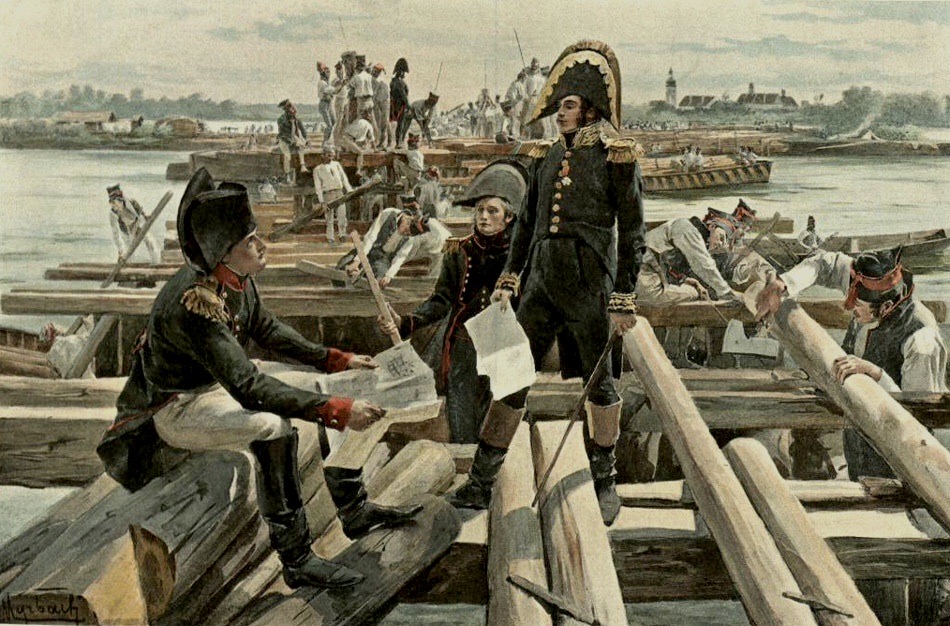
Napoleon Bonaparte and Fort Boyard
Today the most famous French fort in the world brings together intrepid participants ready to brave tarantulas and enigmas to steal its treasure. However, long before distributing its wealth, the construction of the fort initiated by Napoleon cost quite a fortune to prove ... perfectly useless.
Fort Boyard, an impractical project
In 1666, Colbert convinced Louis XIV of the importance of building an arsenal in the Antioche strait, a maritime boulevard facilitating the entry of enemies onto the Charente coast. Rochefort emerges from the silts with a lot of royal liquidity so well that it is designated as the “golden city” raised in record time on the marshes. Impossible for this city to exist without its harbor. However, this roadstead located opposite the wide open Antioch strait can only count on a very modest avant-garde: the island of Aix . This tiny crescent of land three kilometers long and barely 600 meters in its greatest width is charged, almost by itself, with the guard of the whole arsenal. Its strategic importance is considerable and inversely proportional to its size!
Thus, from 1689, the island of Aix and the small Madame island at the opening of the estuary became the object of slow but absolutely necessary fortifications. Vauban fortified the village in 1669 and then at the beginning of the 18th century, the forefront Sainte Catherine, in the south of the island, was equipped with the Fort de la Rade, which did not resist an English attack in 1757. There is no doubt that the island of Aix is definitely a strategic high place and it is indeed the First Consul Napoleon Bonaparte who takes full measure of this delicate situation.
From 1801, Bonaparte noticed the weakness of the fortifications and the poverty of the defense system. If by chance the English made a breakthrough in the Antioch strait, nothing could firmly stop them. This vulnerability must be remedied as quickly as possible! The First Consul therefore instructs the General Inspector of Maritime Works Ferregeau to take up the idea already expressed in the 18th century of a fort along Boyard’s loins. The project is ambitious because this rope is a sandbank located halfway between the island of Aix and the island of Oléron. Already spotted by Dutch sailors who are wary of it, this bench known under the name of “banjaert” in Dutch and “boyar” in Anjou and Saintonge gives the construction both sorrows and its name.
The project is ambitious, probably too much for the means at the time. It is necessary to build on this bench an artificial reef on which will sit the foundations of a building, gigantic elliptical ring 80 meters long and 40 meters wide. The fort is based on a new defense system theorized by Montalembert who offers instead of a bastioned fort, a frontal opposition to the enemy who must take advantage of the firepower of the powerful guns. It was by banking on this remarkable progress in artillery that he saw how to go beyond Vauban’s defense systems.
In 1803, work began with the construction of Boyardville, on the island of Oléron. Workshops and materials were set up there. On May 11, 1804, the first block of stone was laid, then followed by those taken with explosives on the point of Coudepont on the island of Aix and then transported in boats and barges along Boyard. The work is exhausting, difficult and accidents regularly punctuate the rise of the artificial island which finally emerges above the water and whose first crown wall is visible in 1805. It won’t be visible for long. The winter storm that same year reduced him to nothing.
Courageously, workers return to the task. The means were reinforced in 1805 and finally, the platform which will support the future fort is visible at low tide. The first seat rises. Unfortunately, the storms of winter 1806-1807 once again erode all the efforts made for several years. The blocks so difficult to transport sink to the bottom of the sea, nothing remains of the first course placed on Boyard’s sandbank. This pharaonic project mobilizing very large sums of money is in the headlines: should the country persist in pursuing such a project in such difficult conditions? The works were immediately suspended and the local authorities await the visit of Napoleon I in the summer of 1807. He alone will be able to decide on the future of the fort. The emperor, convinced that this building would finally allow effective defense of the Antioch strait, ordered the work to continue… but in reduced dimensions: 68 meters in length, 21 meters in width and 20 meters in height at the ramparts. The walls should be more than two meters thick. Painfully, the construction site resumes.
Impatient, Napoleon I wanted results, and quickly. Since the garrison of the island of Aix and the mobilized workers were not enough, the emperor was determined to draw on the resources of a population that could be forced into labor, that of convicts from reformatories and a few prisoners of war. The construction workforce now stands at 27 ships, 186 crew members and at least 600 workers. Alas, the imperial will, however firm it may be, can do nothing against damage. A new foundation is put in place. It is feared that it will sink under its own weight which is greatly reduced. The joints are made with lime and the blocks are firmly anchored to each other by “strong iron spikes”. But, definitely, winters are not favorable and that of 1808 is no exception: the storm is raging, the base is sinking again while the wages of the workers are too sporadic to give them the heart to the work. Another year of laborious efforts punctuated by mutiny and the battle of the fireships will put an end to this expensive project for a few years.
The Battle of the Basque Roads, April 1809
From April 1, a frigate and an English brig – undoubtedly under the guise of English humor – interrupt the work on Boyard’s sandbank and scrupulously destroy the installations without worrying about the crossfire coming from the island of Aix and Boyardville. Ten days later, an explosion resounded in such a deafening crash that it was said to have been heard as far as Poitiers. The English threw frieships into the sea, old and unusable ships transformed into infernal machines because they were loaded with explosives of all kinds. Navigating with the currents, these time bombs are heading straight for the fleet of the admiral Allemand who has no other choice but to deal with the most urgent, striving to save his crews and ships from disastrous fires. The result is disastrous. Certainly, several sailors and ships were saved, but there was hardly anything left of the fort under construction. The project was abandoned and would not be relaunched until 1842.
The efforts to be deployed are just as colossal as at the beginning of the 19th century but no longer take into account the progress of artillery. And when Fort Boyard is finally completed, the result is a perfectly useless building that neither artillery nor strategy needs. Abandoned for years, it eventually became a military prison but closed again in 1913. It will have to wait until the end of the 20th century to become the celebrity we know today!
Fort Boyard and the Fortified Belt of the Antioch Strait
The Fort Boyard project was to reinforce a defense imagined to defend the bay of Rochefort and the access to the strait of Antioch. This fortified belt with impressive cross-fire power was to pass the envy of any enemy to venture further in his project. To do this, Napoleon I started the construction in 1808 of Fort de la Sommité on the highest point, north-east of the island of Aix. The bastion was renamed Fort Liédot in 1812 in homage to Colonel and military engineer François Joseph Didier Liédot (1773 – 1812), who died during the Russian campaign . It took 24 years for Fort Liédot to be completed, but its construction was remarkable in many ways. All in Crazannes stones, the fort is built on a bastioned square plan and equipped with a model tower n ° 1 type 1811, a standardized defense construction bringing together in a single building the gunpowder magazines, the food stores and the housing of the gunners. After some modifications, this model will become a redoubt-model n ° 1, the one and only copy built of this model. The whole could shelter a garrison of 600 men or… children. It is in fact the future that was finally reserved for this fort which became a place of detention before being transformed into a reception structure for summer camps. Some will see it as a link that we will not substantiate.
Instead of the fort destroyed by the English at Sainte Catherine Point in the 18th century, it was decided to take back what was left of the old construction and to build a fort regularly modernized throughout the 19th century.
A stone’s throw from the Ile d’Aix at the mouth of the Charente and accessible on foot from Fouras, the rock of Énet, accessible at low tide, had already shown its importance, evidenced by its fortification from the Middle Ages. After the Battle of the Basque Roads in April 1809, the construction project for Fort Énet was put back on the table. Its main interest lay in the possibility of crossing the fires of Énet with those of Coudepont on the island of Aix, more solidly protecting the access to the bay of Rochefort. Today, Fort Énet is admired less for its crossfire than for its elegant architectural simplicity, much appreciated by connoisseurs and lovers of fortified structures.
Despite all his will and the awareness he had of the weakness of the maritime defenses of this part of the Atlantic coast, Napoleon I never succeeded in setting up the fortified belt he had imagined to defend the Antioch strait. Ironically, the island of Aix was as much the core of a defense strategy against the English as the last stay of the emperor before surrendering to them. He was then preparing to join an island whose remoteness was the best bastion against any attempt at attack .
Creation of the Bank of France by Napoleon Bonaparte
In this very young XIXth century, the moribund economy post Revolution urged the First Consul Napoleon Bonaparte to create the Bank of France January 18th, 1800 to promote the economic recovery of the country. The thrifty Napoleon wanted to create a stable and strong value in the heart of an institution that should not serve as a fund to the state but to promote its businesses.
A Stormy Political and Economic Context
The XVIIIth century was not beneficial to paper money. Scalded by the financial scandal of John Law (1671 – 1729) in 1720, the French had plenty of time to confirm their aversion to printed money when they were fooled a second time with brandishing revolutionary assignats that were nothing else than a lightning and spectacular inflation. Some, however, got rich. Among them, the Swiss financier Jean-Frédéric Perregaux (1744 – 1808). Precisely preceding the perpetual neutrality that will later make the pride of his native Switzerland, our Helvetian, who, before the Revolution, mixed with the world’s most popular aristocratic circles, was careful not to display too clearly his political opinions during the brutal change of regime. He preferred, as many at that time, to adapt them to the necessities of the moment. It was certainly the right move since the members of the nobility – fiercely attached to their heads – were quick to flee abroad taking care to carry with them a considerable part of the metal currency of the late Kingdom of France. A financial crisis hit the people, who – having nothing to fear for their own head – had everything to fear for their finances. In an extremely unfavorable economic climate, bankruptcies were numerous and internal trade paralyzed. The Directory was unable to remedy the problem in a sustainable way and it was not until the Brumaire coup (November 9-10th, 1799) to see the emergence of hope for a government stability essential to an economic recovery of the country. It was then that our dashing Swiss banker approached Bonaparte, the context and Napoleon smiling at him in concert.
Perregaux and a few banker friends (Le Couteulx, Mallet and Perier) first obtained the right to print bank notes for their own establishment named Caisse des Comptes Courants. They aim to collect the savings then hoarded by individuals and increase the amount of money in circulation. The Banque de France was created on 18th January 1800 by decree and quickly absorbed the Caisse des Comptes Courants. The very young Banque de France settled in the Hôtel de Toulouse, rue de la Vrillière in Paris, of course.
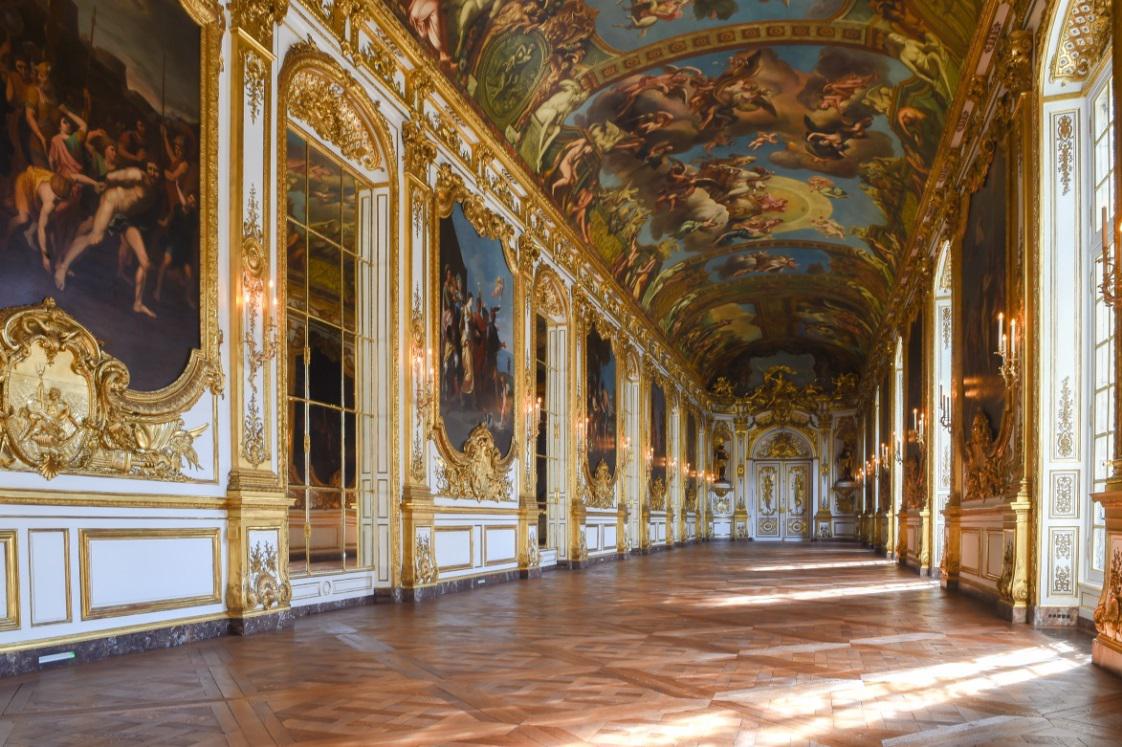
The first Consul wanted to be cautious and wanted to guarantee the stability and reliability of this new institution. The first issues of notes were thus guaranteed to find their equivalent in quantity of gold of the same value to any person who wished it. To proceed to the exchange, one should simply go to the Rue de la Vrillière. It was all about the reputation of the bank and its future, the first Consul was perfectly aware. The French, who enjoyed nothing less than being fooled three times in a row, were at first extremely suspicious. Then little by little, confidence returned. It must be said that Bonaparte’s personal, hard-hitting and irresistible involvement had something to do with this success. He placed some of his own funds in trust with the Bank and persuaded his family and relatives to do the same. The transaction, together with the capital contributed by wealthy shareholders, provided the institution with considerable capital, which was necessary to establish its essential importance. Soon, the Bank of France was the only bank authorized to issue monetary values hence its name “central bank”.
The main clients of the bank were ordinary banks, whose business was to lend money to individuals and businesses. The principle was therefore based on the promise of repayment made by the borrower to his banker, a promise referred to as a “bill of exchange”. At the same time, ordinary banks needed money to lend to new customers. They needed to have sufficient financial reserves to act without waiting for borrower clients to repay their debts. Ordinary banks turned to the Banque de France and bought him notes in exchange for the bills of exchange they had at their disposal. Naturally, the amount of money increased in the country and allowed to revive commerce and industry. In turn, the latter made profits that were inevitably taxed. Finally, the increasing value of taxes levied by the state allowed the country to get rich and the First Consul to finance his army (and not his campaigns).
The Franc Germinal, a Reliable Economic Value
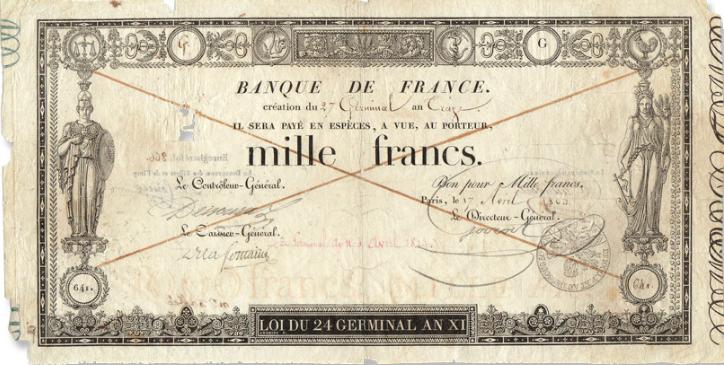
The first notes issued by the Bank of France were of such value that they were not accessible to all. The 500-franc notes represented a little more than a year’s salary for a worker, and that of 1000 was equivalent to double the work, naturally. Not being convertible into gold elsewhere than in Paris, the notes further restricted the circle of lovers of bundles. These notes occupied so well the only high Parisian business that they had confused any merchant if a citizen would have the idea to give one of these papers to pay for a chicken (not far from becoming Marengo).
On the other hand, the memory of John Law and the revolutionary assignats remained tenacious, and the French countryside still preferred metallic values for their trade. The Revolution, by a law of August 15th, 1795 had already decided to replace the livre tournois by the “franc d’argent” but its will alone was not enough. Indeed, the fiery and first Republic had that in common with Josephine de Beauharnais (1763 – 1814) at the same time that no one had enough money – metal for one, ready for the other – to satisfy their needs. It was thus necessary to wait for the 7th germinal year XI (March 28th, 1803) to see reappear this franc which borrowed at its date of creation the name under which it will exercise until 1928 namely, the franc “germinal”.
Manufacturing and Security of Monetary Values
The first two banknotes put into circulation by the Banque de France represented considerable sums. From then on, everything had to be done to prevent as much as possible the appearance of false. The paper was first produced at the stationery of Buges in Loiret but it was quickly preferred that of the paper mill of the Marais at Jouy-sur-Morin. The addition of a watermark between the two sheets of paper constituting each note was one of the first security provisions. Then came the quality of the drawing for which Charles Percier (1764 – 1838) was called upon. This neoclassical architect who had distinguished himself in his achievements for financiers working alongside the First Consul was not long to be warmly recommended to the latter who praised his talents for a long time. The engraving of the matrix was entrusted to Jean-Bertrand Andrieu (1761 – 1822) who took as a support a steel plate to guarantee an inking always equal. Finally, the engraving typography returned to Firmin Didot (1764 – 1836) whose name is still well known today by lovers of prints and old editions. A stub was added, a dry stamp (embossing the paper obtained with a press) and a wet stamp (a technique for printing simultaneously on the front and back).
As for the symbolism of the chosen motifs, we find the strong influence of the Roman Empire (tinged with the neoclassical taste born from the excavations of Herculaneum and Pompeii in the XVIIIth century). Compass and square evoke the tools of the builders using geometry and architecture, while the rooster emblem of France rubs shoulders with the scale of Justice. The divinities represented are those that the great estates considered as constituting a strong state in the XIXth century: Vulcan for industry, Apollo for the arts, Ceres for agriculture and Poseidon for the colonial empire.
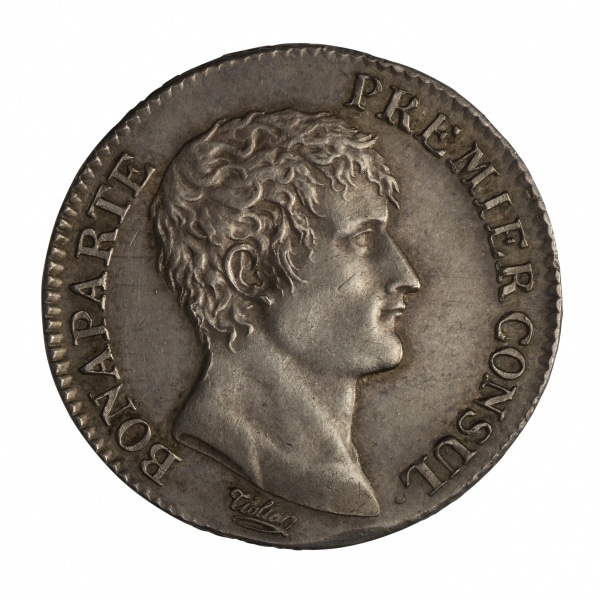
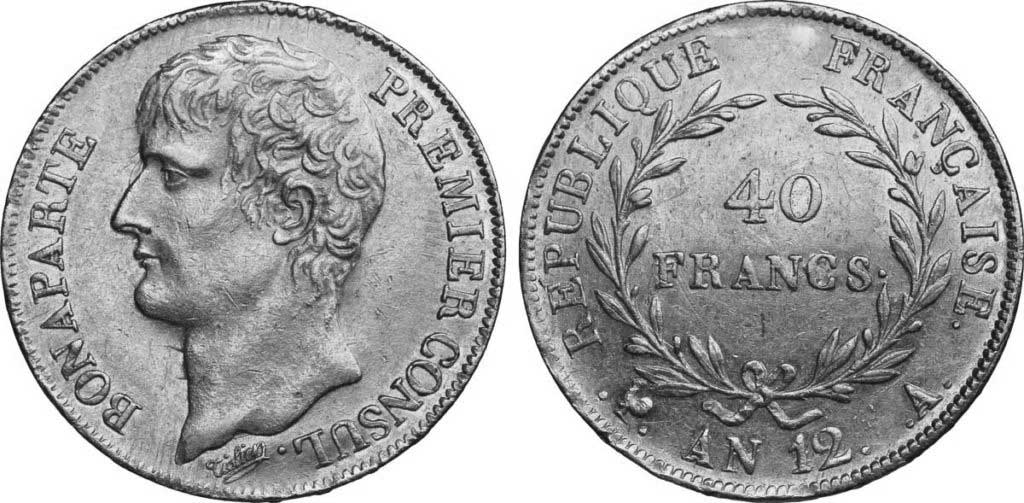
Metal coins are subject to the same concerns, both security and symbolism. The Republican motifs were replaced at the obverse of the pieces by Bonaparte’s bare-headed profile – whose engraver, General Pierre-Joseph Tiolier (1763 – 1819) painted the portrait – accompanied by a legend “Bonaparte First Consul”. The reverse was an olive crown, the face value of the coin and the legend “French Republic”. Of course, an imperial proclamation will be enough for the motives of coins and notes to be changed once more.

The creation of the Banque de France had a decisive impact on the country’s economy and its imperial expansion (although it did not finance them, the Emperor always defended it). Paper money improved, gaining security and discouraging counterfeiters. However, in 1959, the Bank of France issued a 100 franc note of Napoleon. This note made famous the forger Czesław Jan Bojarski (1912 – 2003) who made a specialty of the falsification of these “Bonaparte notes”. His mastery in this field is still unchallenged and unmatched. These fakes are now rare and expensive collectibles. An irony of history that certainly did not escape the Emperor if he had been alive to appreciate it.
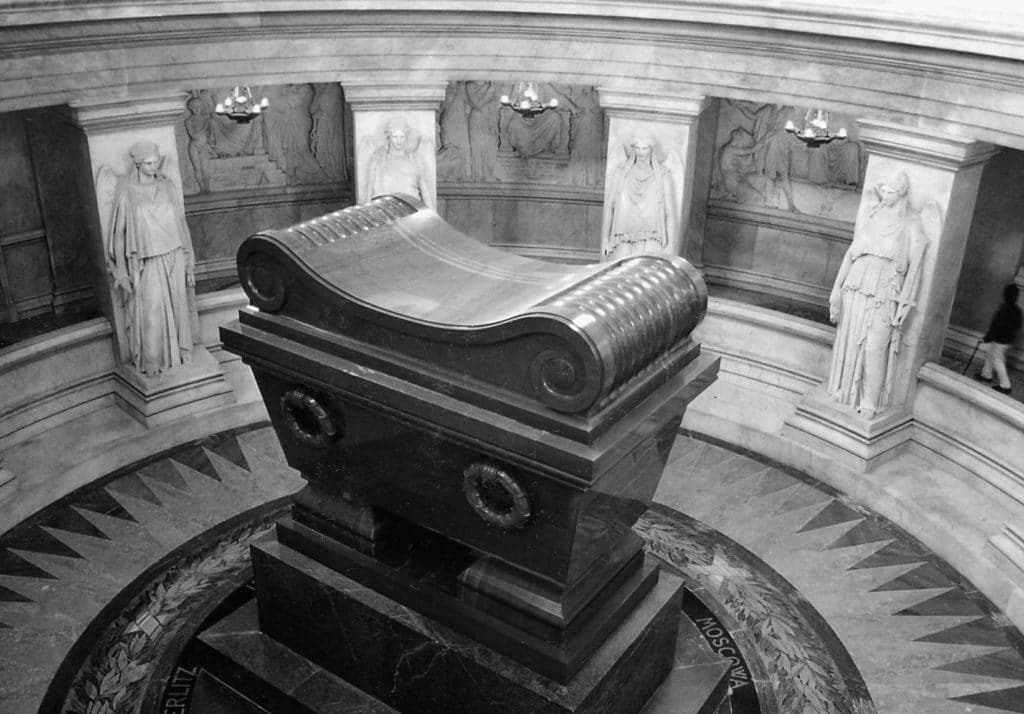
The Death of Napoleon: such a big mystery?
When Napoleon died at St. Helena, the question of the causes of his death soon became a subject of debate. Cancer? Poison? These only evocations excite passions, because Bonaparte passed master in the art - beyond his death - to feed his own legend. Who would not try to imagine a romantic ending at the height of this extraordinary character?
Napoleon Bonaparte dies in St. Helena
On May 5th, 1821 at 5:49 pm, he died at the age of 51, the man who dominated most of Europe for a time. Arousing as much admiration, fear as hatred (the great authors such as Tolstoï, Germaine de Stael or Chateaubriand left us with strong memories), the exiled Emperor dies, however, after long suffering in his home in Longwood without even leaving a good word for posterity (his last words were confused and unintelligible).
Since March, Napoleon was bedridden and was less and less supportive of food, weakening rapidly. Persuaded for a long time that the evil that took away his father (a stomach cancer) would eventually defeat himself, he refused in the last month before his death most of the medications prescribed by his doctors. Nevertheless, the latter decided on May 4th to override the clear will of Napoleon I, agreeing with very poor common sense on the administration of a dose of calomel diluted in a glass of water. Only Dr. François Antommarchi (1780/89 – 1838) fiercely opposed it without winning any success. Louis-Joseph-Narcisse Marchand (1791 – 1876), faithful companion of the emperor, was charged with giving the secret remedy, mission which he acquitted painfully when Bonaparte, having drunk the contents of the glass said to him “with a tone of so affectionate reproach […]: “Are you misleading on me too?” Marchand, deeply moved, was indeed failing in his promise not to administer anything to him without his permission. The calomel certainly had an effect but probably not what we expected and so that May 5th late afternoon, Napoleon gave his last breathe. When midnight was over, the body was moved, then washed to purify it with the cologne that so he loved mixed with a little water from the Torbett Fountain.
Although the last will of the emperor was to be buried in France, the British government strongly opposed it through the governor of the island who however left free the relatives of the deceased to choose a place of burial at St. Helena.
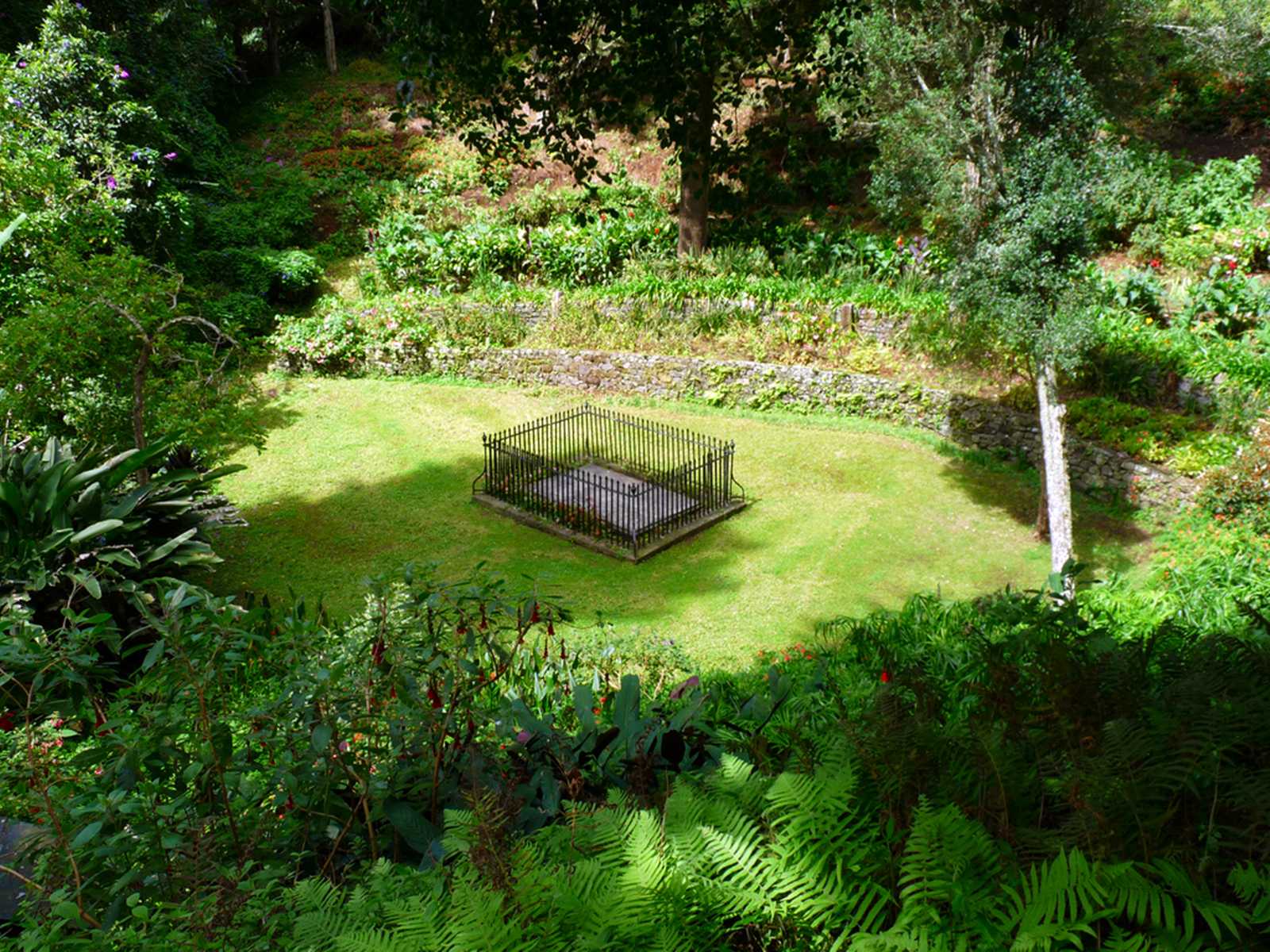
Napoleon had discovered the Torbett fountain a few years before in the company of Henri-Gatien Bertrand (1773 – 1884) and recommended that: “if after [his] death, [his] body remains in the hands of [his] enemies, [they] should drop him off here.” The place thus imposed itself. The upholsterer Andrew Darling, who supervised the making of the coffins notes that he was told that “the coffins were to be the first in tinplate, upholstered in cotton-padded satin, with a little mattress and pillow in the back made of the same materials; the second of wood; the third lead; and finally a casket of mahogany covered with purple velvet, if it could be obtained.” Mahogany being a rare wood on the island, a table of this essence was sacrificed for the making of the last coffin.
After the autopsy of Napoleon, the heart and the stomach were placed in two vases of silver, filled with spirit of wine. These vases were hermetically sealed and placed in the coffin. The successive coffins were sealed in the same way. A lot of precautions were taken to make the tomb of Napoleon an impregnable fortress (one sank the cement in the pit before laying three heavy slabs and a gate of cast iron). The stele, however, remained silent since – without being a surprise – the English and French never agreed on the inscription, which would indicate the identity of the deceased as accurately as possible; each nation having a very firm idea of what it meant by “accurately”.
Napoleon prepares his legend
Long before he died, and even when he was at St. Helena, the emperor remained a fierce opponent of the English. The decision to isolate him in the middle of the Atlantic was therefore the least they can do and surely the British were not surprised to see the rare talent that Napoleon deployed to systematically undermine their authority. Emmanuel Las Cases (1766 – 1842) testifies in his memoirs of the treasures of inventiveness deployed by Bonaparte to give Europe the image of a dishonorable captivity, making the English revolting characters and completely devoid of humanity. Yet the reality was quite different and Napoleon was treated well despite some financial questions and etiquette that often put Bonaparte in a rage (the English in charge of his surveillance opposed him with consistency and determination the title of “general” when Bonaparte required that of “emperor” which he considered legitimate). Thus, our Corsican made for example sell his silverware on the place of Jamestown to make believe that he was at the last levels of poverty. The merchants returning from the Indies were, without them’s knowing, to play the role of gossips in Europe and to spread the infamous news. Jean Tulard, historian and specialist of Napoleon I, also recalls that Napoleon gave “an odious role to Hudson Lowe (1769 – 1844), who by the way, was not a monster of finesse”. While before embarking on Île d’Aix in July 1815, Napoleon I had refused several plans for escape, “it was better for his legend that he died, as he will say, murdered by the British government” recalls Pierre Branda, a French historian specializing in the Consulate and the First Empire.
What is Napoleon Bonaparte dead?
Unless one desecrates the tomb of the Invalides, will we ever know it with certainty? Nevertheless, the many accounts of his relatives and witnesses of his burial and his, to say the least, confrontational relations with his phlegmatic British jailers further guide the trail of the investigation to a death of pathological cause than to that of a perfidious poisoning. Of course, this last theory has something to seduce! Can a historical figure of this stature die stupidly from a failing stomach? It would seem, however, that we had to live with it.

Some people brandish the traces of arsenic detected in his hair but it is quickly forgotten that they were also found in those of Josephine and l’Aiglon. It is also unaware that in the 19th century arsenic was widespread in a role other than poison, so much so that it was often stored in the kitchen (and sometimes served as an unfortunate or criminal ingredient of an an undesirable gastronomy). It was used to make candles, cigarettes, tapestry pigments, dyes, paints and cosmetics. Many locks of hair of the imperial head were studied. It is almost systematically concluded that the doses were certainly high, but not for the 19th century. On the other hand, since the hair roots showed traces of arsenic, some people argued that this was proof that Napoleon had ingested the poison by food or wine. It had first been necessary for the poisoner to be a close relative of the emperor and to show extreme patience, for the man would certainly not die struck down by so small doses of arsenic, unless one envisages long-term poisoning. Unfortunately, the “French service” at the Longwood table (the dishes are presented on the table, people help themselves to dishes), it was necessary that the criminal also poisoned! As Jean Tulard slyly summarizes, either the poisoner was not good at it, or he still took a long time to kill him.
What about the body that was found almost intact in 1840 before his repatriation to the Invalides?

Arsenic, as well as an embalming, is famous for keeping the bodies in good condition. Once again, let us remember that Napoleon was buried, not in one, but in four hermetically sealed coffins. Most likely, a phenomenon of saponification (transformation of the flesh into adipocere) was favored by the absence of air and in this type of case, the good preservation of a body is quite often noted. Would one then enjoy to exchange the body of the sovereign by another less prestigious and bury in the Invalides a cook rather than an emperor? Again, there is no reason to believe this since the exhumation took place in the presence of many witnesses who had seen the imperial body 20 years ago. No one found fault with this, and, having passed the surprise of this astonishing preservation, they easily recognized the famous Napoleon.
[thrive_leads id=’74591′]
The question of the death of Napoleon I now unleashes the passions and testifies far less to the interest aroused by the emperor than his incredible talent for communicating, he who well before his death, was fully aware of the exceptional nature of his destiny. « My life, What a novel! » He said, dictating his memories to Las Cases during his exile in St. Helena. He could not have been more right: what better novels than those whose end maintains the mystery?

