
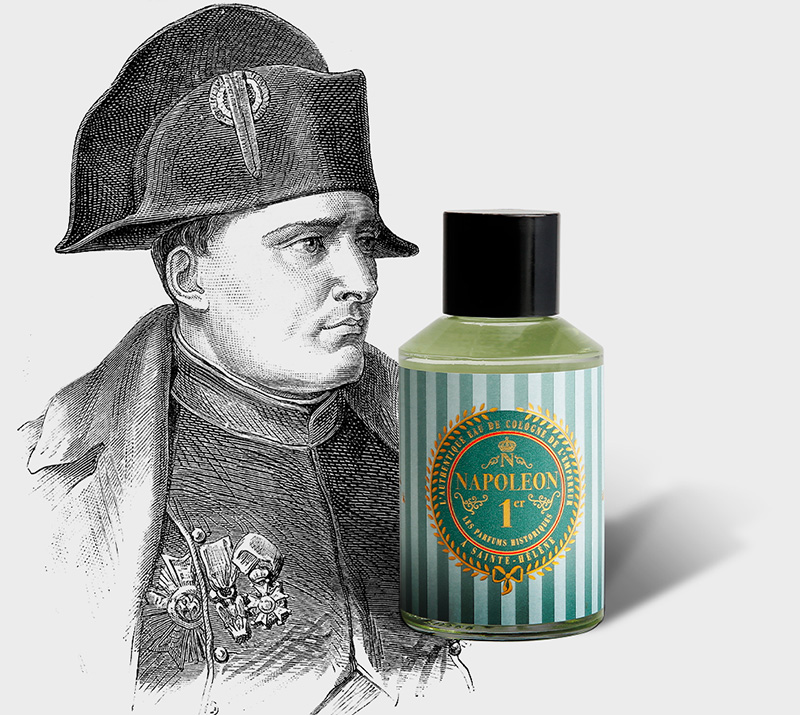
The Renewal of Eau de Cologne
Previous century was not gentle with the Cologne. Mocked by a perfumery that swore by heady and featureless fragrances, the discreet Cologne was patient until it wins its spurs today. An esthete scent which prefers to accompany the toilet rather than oppose the perfume.
A Modern Water
The modernity of the cologne paradoxically resides in its age. For almost two centuries, the most chic bathrooms have given it a place of choice. The large retailers, without being able to seize it, damaged in the eyes of the public the elegant image of this fresh water. Designed from natural ingredients, Cologne meets our modern wishes to return to more simplicity. Down with formulas whose “active principles” are more incomprehensible than a quantum physics equation! Some citrus fruits, plants, a hint of spices make the recipe simple and yet refined with a water that is more for well-being than for appearance. The cologne is a selfish pleasure: it accompanies ablutions, this moment that prepares us to get out of our intimacy, venturing out in the open air. Its solar freshness awakens the senses and contact with water that is poured generously on the skin is not far to evoke the regressive games of water battles.

While perfumery likes to differentiate the woman from the man, the cologne does not care about gender. Establishing parity before the hour, it seduces us with this phlegm that prefers relaxation and hedonism to calculated seduction. It pleases by its simplicity which does not lack character, by its mischievous modesty. It is also this ingenuity that allows to offer a bouquet of shaded scents. The luxury industry made no mistake about it.
[thrive_leads id=’74591′]
A Refined Water
It is no longer a luxery firm that can refuse to have its own cologne. As a curious becomes an esthete as he goes along the subtleties of an art, many discover the elegance of the Cologne after having to face the impasse existing between a perfume which, on one hand, requires to get ones dressed to be worn and, on the other, the soft, unattractive smell of soap. Not everyone is Marilyn Monroe enough to think that Chanel No. 5 is suitable for all occasions. However, this is the first quality of the cologne: its lightness and simplicity make it the ideal fragrance in a daily where the perfume would be too pretentious. During relaxation moments, at the end of a sports session or simply for pleasure of contact with it, this water leaves on the skin a clean smell that resonates with lightness. The fresh notes exhale when we sprinkle it on our skin and its modesty leaves the wake back when ablutions are done. Cologne does not intend to perfume, it elegantly radiates a moment but knows the value of discretion. Napoleon, who copiously sprinkled himself with it, did not deny it that quality, he who had a horror of heady perfumes. The cologne awakened him without distracting him with catchy scents. Fresh without being banal, Cologne embodies an ideal of modernity where the sophistication is well matched with ingenuity.

New Year's Eve at Saint Helena
First half of the XIXth century still ignores the festivities of Christmas without being spared - at least in the wealthiest social classes - by distribution of gifts on New Year. This tradition of New Year's Eve also follows Napoleon in the latitudes of St. Helena. To offer New Year's gift meant to maintain his rank, a respect of etiquette rather than a necessity for the Emperor who did not confess fallen.
New Year's Eve at St. Helena.
Freshly landed at St. Helena on October 17th, 1815, Napoleon did not arrive alone. His little entourage knew the greatness of the Empire; it is certainly inconceivable for Bonaparte to make them witnesses of any decay of his person. As soon as he took possession of Longwood’s residence, the Emperor reinstated the strict etiquette that governed life in the Tuileries palace. But this etiquette that we think at first binding for his entourage was just as much for him. In applying it, Napoleon was well aware of the duties that he would impose upon him during his exile. On December 10th, 1815, day when he moved to Longwood, the imminence of the new year is only felt too much. But the perfidious Albion seemed to decide to insidiously disturb this tradition by choosing for land of exile that arid St. Helena on which no goldsmith or jeweler, artist or upholsterer had ever had the happy idea of establishing himself on the island. It is therefore in his personal belongings and the precious relics of his sumptuous past that Napoleon will draw to honor his little court.
[thrive_leads id=’74591′]
The gifts offered by Napoléon in Saint Helena.
We unfortunately do not know exactly the furniture and objects hastily carried away by Napoleon and his companions in exile when leaving for Saint Helena. And for good reason, most were purely and simply stolen by the faithful of the Emperor for the sole purpose of pleasing him. The journals and archives of those who had the honor of being admitted in the presence of Napoleon during his exile report some of the gifts he made on the occasion of the New Year. Emmanuel de Las Cases (1766 – 1842) notes in his diary on December 30th, 1815 that he was offered by the Emperor “a small gift, very slight indeed”, according to Napoleon himself, consisting of a monthly salary levied on a sum stolen from English vigilance. In January 1816 Bonaparte offered to Jane and Betsy Balcombe, daughters of William Balcombe (1777 – 1829), agent of the East India Company who welcomed Napoleon in his Saint Helena’s home at the end of 1815, two cups from the Cabaret Égyptien, pieces from the porcelain service of Sèvres which the Emperor held so much that he refused to use it on a daily basis for fear of breaking it.
The so-called “headquarters” (Quartiers Généraux) service – which did not know any Saint-Helene dishes for the same reasons as those which prohibited the use of the Cabaret Égyptien– was also cut off from certain pieces the following year when, for their presents, Napoleon offered to each Madame de Montholon and Madame Bertrand a plate from the precious service. That same month of January 1817, the Baron Gourgaud (1783 – 1852) reports that the Emperor offered more personal objects: to Madame Bertrand a candy box formerly offered by Pauline Bonaparte and to Gourgaud an spyglass that the Emperor held from the Queen of Naples, her youngest sister. To Bertrand he offered a game of chess and then played a party with him after the distribution of gifts. In January 1818, the New Year’s day is reduced to candies contradicting the very adventurous predictions of Madame Bertrand, who was expecting “sumptuous gifts” ; it is difficult to understand from where this idea came from given the geographical location of the island. These testimonies of happy moments illuminate the often dull idea that everyone has of Bonaparte’s exile. The habits dear to the Emperor remain despite the restrictions. Exile is thus colored with those charming and bourgeois moments that make daily life more bearable, revealing the intimate face of a Bonaparte whom appears as imperial as he is attentive.

Napoleon Bonaparte's emblems : between simplicity and erudition
Napoleon I forged his own emblems far from those too connoted of the Ancien Régime. The young Emperor intends to offer new perspectives to France history whose values are now supported by strong legible and historical symbols.
The antique influence.
Already consul Bonaparte (1799 – 1804) make clear, in his choice of furniture and art objects, an assurance which supported a broader thought in the matter of political will. Once Emperor, his architects and decorators Percier (1764 – 1838) and Fontaine (1762 – 1853) undertook to impose an official style flow with tastes of Roman antiquity. Massive mahogany and marble furniture evoked ancient temples, the luxurious sobriety of gilded bronzes borrowed the decorations of Republican Rome while the golden yellow, green, crimson and purple colors drew on the newly discovered frescoes of Herculaneum and Pompeii. It was at the dawn of his coronation that arose the thorny problem of the future imperial emblems. Everyone went there with his animal; the least chauvinists proposed the lion or the elephant while the most patriotic have their heart set on rooster. Others, probably more bucolic, suggested the oak. While the gallinace seemed to prevail for a time, it was ousted by the lion, itself scratched by the hand of Napoleon who preferred the eagle. The eagle which was also the emblem of imperial Rome elegantly associated the high antiquity and the traditional heraldry through the evocation of the Carolingian eagle.
[thrive_leads id=’74591′]
Clear and erudite symbols.
If the eagle is emblematic of the reign of the Emperor, some symbols more directly evoke Bonaparte. First of all, let us quote the laurel wreath superbly presented during the coronation of the Emperor, where the latter’s head, laureled with gold leaf – art work of the great goldsmith Biennais (1764 – 1843) – gave this historical moment a grandiose character inherited from the ancient panache.
For this mythological attribute of Apollo celebrated in Rome both poets and victorious warlords: the evergreen foliage symbolized the immortality acquired by victory. Honorary and prestigious award attributed to the great military characters and, consequently, to the Emperor, the laurel wreath never lost its superb and reached the XIXth century with the same freshness, enriched only by the idealized glory of the Roman Empire.
Bees, for their part, were recognized for their organization, their hard work and their ability to sacrifice for the common interest of their hive. Nothing less than an ideal patriotic symbol, especially as they held from the Church a divine connotation (they carry the Word of God and wisdom to St. Ambrose and John Chrysostom). Moreover, it is believed (until recently) that the gold insects found in 1653 in the tomb of Childeric I – the not very famous founder of the Merovingian dynasty and father of Clovis – were bees. But it turns out that the latter were actually cicadas. Either, Childéric’s bees were considered as the first emblem of the sovereigns of France. It was enough to sit our Emperor in the natural continuity of ruling power without vexing the religious power. Thus linked to idealized antiquity and to history, if not entomological, at least French, Napoleon Bonaparte had only to engrave his name in history. What he did literally. His number (the letter N) was indeed carved on the facades of the Louvre. Nevertheless, the avenging Bourbon, once returned to the throne, hastened to hammer the imperial letter wherever it was. Thus, most of the “N” that adorn the Louvre today are those of Napoleon III and not those of his uncle emperor. Finally, last symbol and not least, the crowned “N” found on the coins of that period. This crown, now preserved in the Louvre, was only used on the coronation day. Called the Couronne de Charlemagne, it presents a timeless medieval look with eight half-arches of gold adorned with cameos; a globe surmounted by a cross completes the work drawn by Percier. Placed above the head of the Emperor, already surrounded by laurels, the crown tied ancient glory, history and patriotism all the ceremony long.
This set of symbols produced a simple speech, clear and powerful as the juxtaposition of its elements instantly evokes, and still does today, the Emperor Napoleon I.
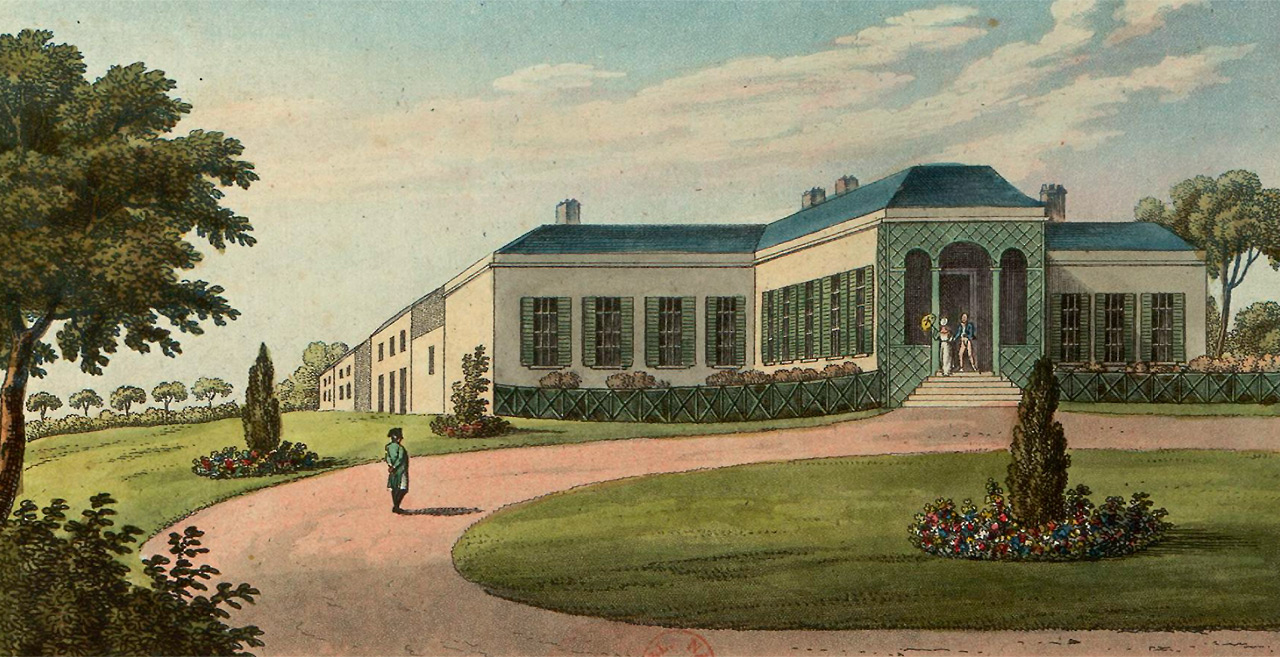
Longwood House
When Napoleon Bonaparte arrived on October 17th, 1815 at his place of exile while his residence at Saint Helena was not yet ready. He moved to Longwood two months later on December 10th, 1815 and remained there until his death on May 5th, 1821. Between piteous furniture and glorious memories of the past, the interior of this dilapidated Longwood was both a disrespectful prison and cradle of the myth birth.
Between respect and bitterness: the British reluctance to keep its commitments to its famous prisoner.
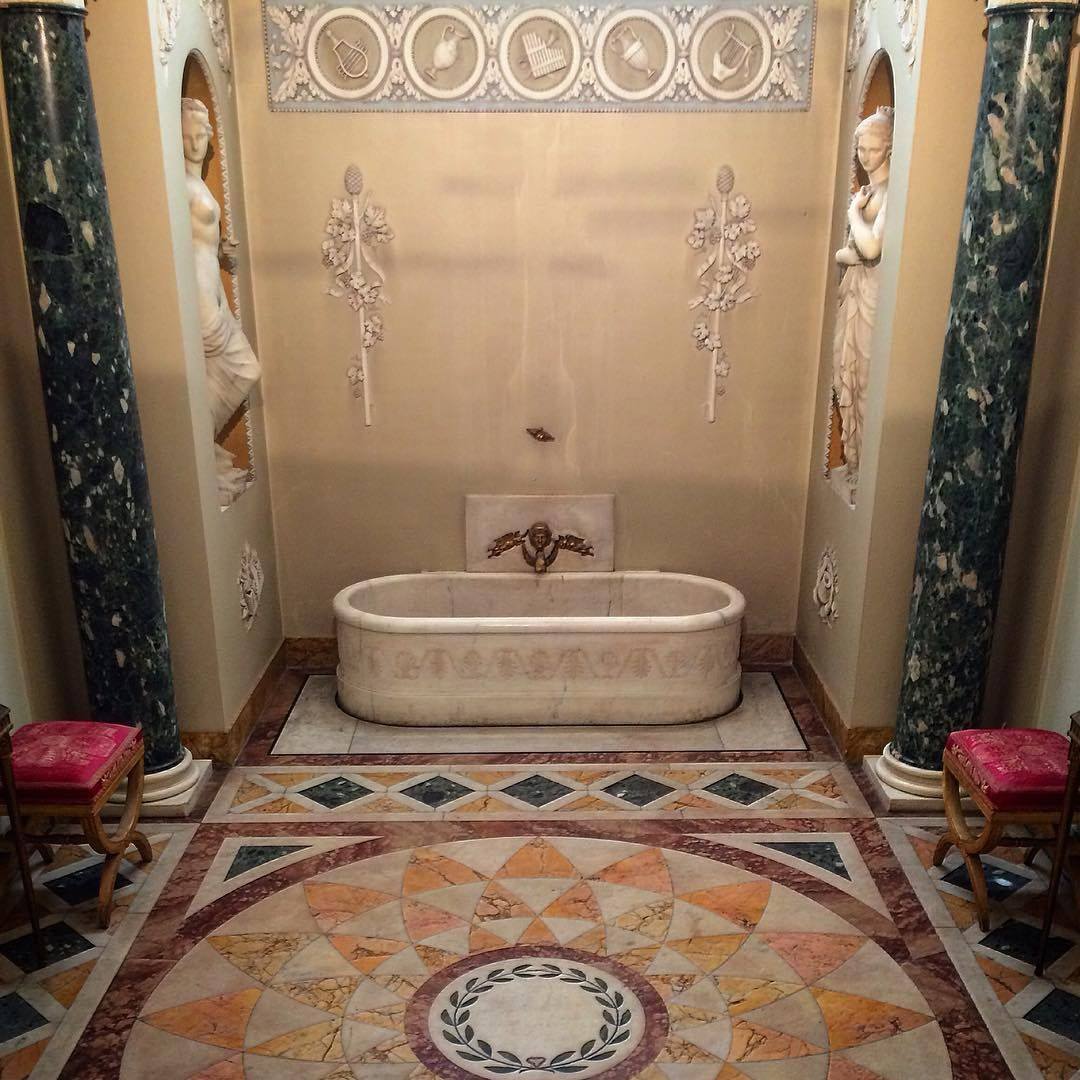
Longwood House is from Napoleon’s arrival a second rate house poorly built where water seeps everywhere. During the 68 months in which Bonaparte was confined there, many rotting pieces of furniture were burned, repaired or redone. Far from the vast and comfortable palaces of Saint-Cloud or the Tuileries, this house of 150 m2was, in the opinion of all, as deposed he was. Longwood was divided into an antechamber, which became a billiard room in 1816 (Napoleon nevertheless used it as a “topographic salon”), a lounge, a dining room, a study, a bedroom, a library, and a bathroom with copper tub. The English, who were obliged to cover the expenses of Bonaparte’s imprisonment, did not shine here by their fair play. In addition to the dilapidated decay of Longwood, the attentive observer will note in Sir George Cockburn (1772 – 1853) – in charge of finding all the necessary furniture – a certain resentment towards our Corsican since he acquired at a low price from the local disparate furniture that they themselves held thanks to their haggling with the British, Dutch, Portuguese and American ships passing on the island for supplies. Some of the finest furniture on loan from the East India Company came to enrich the house interior, as well as some of those specially designed by George Bullock (1778-1818), a London cabinetmaker, originally intended to furnish Longwood New House, a residence under construction when Bonaparte arrived but in which he will never live.
This shameful disrepair in the eyes of the French as of those of several English visitors nevertheless found a major adversary in the strict imperial etiquette applied throughout the estate, in the splendor of the furniture and objects brought back from France and in the very dignity of the imperial prisoner.
[thrive_leads id=’74591′]
Luxurious reminders of the reign, a fertile ground for the birth of the Napoleonic myth.
Sir Hudson Lowe (1769 – 1844), governor of the island from 1816, was the first offended that the rank of the general was not respected in the layout of Longwood itself. By way of compensation, he offered Bonaparte a large billiard table and two important globes, one terrestrial, the other celestial. Then, on the ordinary wooden furniture, on the mahogany consoles, the relics of the Napoleonic reign helped to hide the British failure. The diaphanous marble bust of the King of Rome, sparkling pendulum in gilded bronze and enamel, majestic eagle sculpture in silver, luxurious gold sword and damascened steel – a unique artwork of Biennais (1764 – 1843) – lend their magnificence to the embellishment of an everyday life punctuated by the writing of Napoleon’s memoirs.
In the uses, the particular service of the Emperor realized in the finest porcelain of the imperial manufacture of Sèvres, the elegant crystal glassware or even pieces of the coffee service called “Cabaret Égyptien“, also of the manufacture of Sèvres and which Napoleon appreciated so much, allowed to establish the dignity of a man who intends to remain sovereign until his last breath. Witnesses of his past glory and his myth to be born, his campaign bed, “this old friend he preferred to any other” according to Louis-Joseph Marchand (1791 – 1876), in which he breathed his last, is still exhibited in Longwood while his beloved Athenian is now presented at the Louvre.

The Arrival of Napoleon at St. Helena
Following the Hundred Days (from March to July 1815) - the short period in which Napoleon regained power after his second abdication - the decisive defeat of Waterloo (June 22nd, 1815) is paid a heavy price by victors. The casualties were enough to prove that Napoleon represented a threat to future European peace unless he was sent to a reclusive land far from everything. For the Emperor, even vanquished, seemed to have the same determination as the phoenix to reborn from ashes.
Exile Required by the European Powers.
While the defeat of Waterloo sign the imminent end of the Hundred Days, Napoleon surrendered voluntarily to the English who has the responsibility to choose his place of exile. While the fallen Emperor hopes to be sent to the United States, Great Britain is responsible for keeping him in good guard before the place where he will be sent is determined. For the allies and signatories of the Treaty of Paris (which acts the first abdication of Bonaparte on February 10th, 1763) are united in their intransigence in sending Napoleon where he will be totally and certainly unable to return to Europe to sow – according to their fear – disorder and chaos. At the same time, the allies formed by the European rulers do not savour the fervent support received by Napoleon during this last period.

Its perfume inherited from the French Revolution does not, indeed, have the leisure to please them which is confirmed by Bonaparte’s support everywhere in Europe. This support sees in this general having started with nothing one of the most important characters of his time, a precursor for a “modern administration and justice, for the meritocracy and the revolutionary principle of equality before the law. (Alan Forrest, in Napoleon at St. Helena, The Conquest of Memory, Gallimard / Army Museum). In this context, the choice of St. Helena does not appear as obvious as a relief. Behind an altruism of facade that justified this choice by a healthy climate and a distance that would to treat fallen Emperor with a particular indulgence, hides a real desire to isolate the general on a land surrounded by much more waves than his native corsican island.
[thrive_leads id=’74591′]
The landing of the Emperor at St. Helena.
On the morning of July 15th, 1815, Napoleon embarked on the Bellerophon flying the British flag bound for Plymouth in the south of England, from which he left on Northumberland on August 7th for St. Helena. His journey lasts several months and he finally arrives on the island on October 17th. The Longwood estate which has been attributed to him is not yet ready and he must, pending the end of adjustments, remain in the property of William Balcombe (1777 – 1829), agent of the East India Company with whom he quickly becomes friends. On December 10th, 1815, the deposed Emperor can finally move into his last home in Longwood, a house without comfort that the small circle of his faithful will strive to soften until the last breath of the general.
In order to please him, domestic service is quickly put in place. The interior and exterior service is provided by Louis-Joseph Marchand (1791 – 1876), Napoleon’s first dedicated and faithful manservant since the age of 20. He is assisted in his task by the Mamluk Ali (1788 – 1856) with whom he befriended. Butler Cipriani and chef Michel Lepage provide the food service while four manservant maintain fires, light candles, set tables and meet the demands of the Emperor and his officers.
Although his entourage is devoted body and soul to his well-being (even to recreate his cologne!), Napoleon can not ignore the control of his mail, his strictly supervised walks or the supervisory of his House spending. Bonaparte died on this isolated island in May 1821 at the same time that his legend was born on the continent that had exiled him.

Athenian of Napoleon Bonaparte
While France leaves Ancien Regime to turn in a 19th century full of promises, habits regarding hygiene change slowly. Water takes a new place at the center of daily custom. Vases, basins and Athenian enhance water making it a symbol of freshness, purity and simplicity essential to the most refined people.
Simple use in a sophisticated furniture
We know the meticulous care that Napoleon took to his personal hygiene. In life as in war he promoted efficiency without losing sight of the importance of etiquette: if his ability to live as a soldier made him popular with his troops, his attachment to objects of power made him an experienced politician. This Athenian, a luxury basin for ablutions, admirably fulfilled these two requirements of efficiency and representation. He found it so much to his liking that from the Tuileries at the time of French Consulate to St. Helena, the imperial Athenian will follow the Emperor to the peaks at his fall. On drawings by Charles Percier (1764 – 1838), the tabletmaker Martin-Guillaume Biennais (1764 – 1843) put all his talent at the service of this luxury furniture made of bronze, silver and yew. Elegant gilt bronze swans display majestic wings to support a silver basin carved with reed patterns.
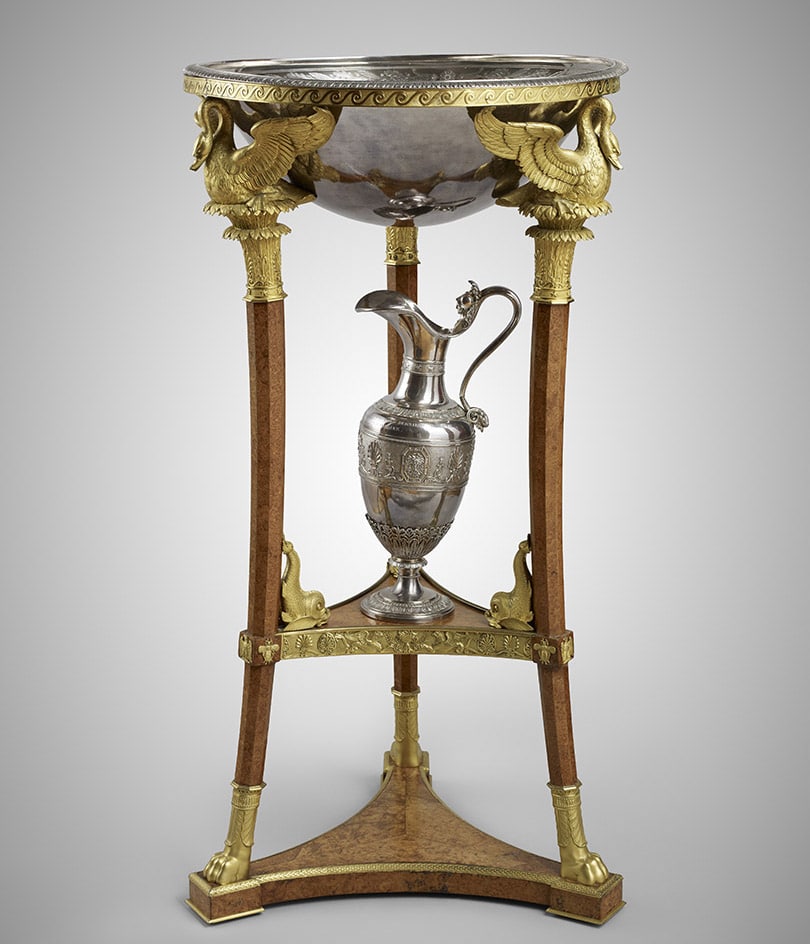
The silver ewer used to pour the water for Napoleon’s ablutions rests on the tablet decorated with dolphin at its angles. While fine bees – emblems of the Emperor – in gilded bronze adorn the Athenian, dolphins, reeds and swans evoke the aquatic world, the freshness of the lakes and rivers, poetic metaphor of the use intended to this piece of furniture.
[thrive_leads id=’74591′]
Such a sweet theft
In his Mémoires, Louis-Joseph-Narcisse Marchand (1791-1873), first manservant of Napoleon tells how, at the end of the Cent-Jours (June 1815), he stole the Athenian at the Palace of the Elysée – furniture that would have been inevitably confiscated – before the deposed Emperor was exiled to St. Helena. Marchand testifies “The Emperor had praised this piece of furniture for his use, I knew what privation it would be for him, he liked after his beard, to put his face in a lot of water […] in the thought of being pleasant to him, I had it brought to my carriage, and I covered it with my cloak so as not to arouse the attention of the passers-by of Paris and on the road.”
There is no doubt that Napoleon praised the attentiveness and delicacy of his faithful manservant! The harshness of island life was certainly softened by the use of this magnificent tripod basin, a practice which, as we know, Bonaparte systematically accompanied with Cologne, which he was so fond of and use to say, at least, in a gargantuan way.
The Athenian today preserved in the Louvre Museum was one of the rare goods for which Napoleon was fond of. He testifies it in his will where “the inventory of [his] effects that Marchand will keep to give to [his] son” states that he bequeaths to the King of Rome (1811 – 1832), his son “[his] sink, his water pot and his foot.”
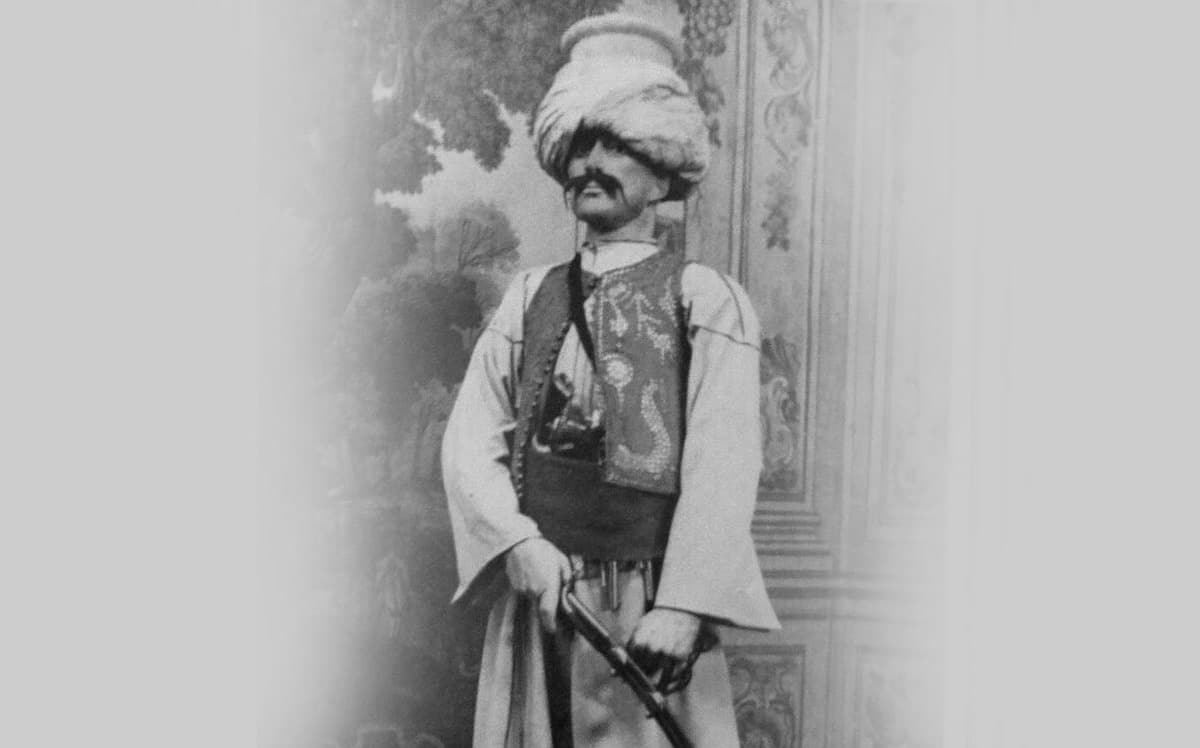
The Life of the Mamluk Ali (1788 - 1856)
A key figure in the history of Napoleon on Saint Helena, we owe him the creation of the Eau de Cologne of the Exiled Emperor. Faithful servant, discreet handyman and apostle of the Napoleonic legend, Mamelouk Ali has oriental only the title: of his real name Louis-Étienne Saint-Denis, the young man was initially intended for the notary.
A Peaceful and Privileged Youth.
His father, a former « piqueur » (a man in charge of training and exercising horses) of the stables of Versailles under Louis XVI became under the Ancien Régime horse-riding teacher, which earned him a certain notoriety. His mother being the daughter of an officer of the royal kitchens at the castle, the young Louis-Étienne received an education (which is already in itself a privilege) and moreover a conscientious education (which touches on exceptional for the time).
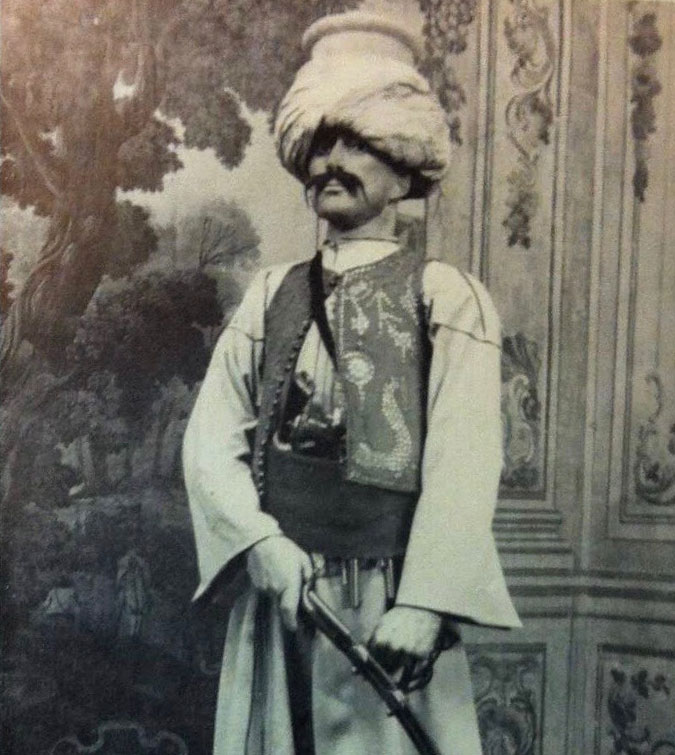
Well educated, the young man is sent as a notary clerk in an office in Paris, an activity whose most adventurous aspect was probably to survive from it. He remained there four years before his father, through Armand Augustin Louis Caulaincourt (1773 – 1827), diplomat and Grand Écuyer of Napoleon I, granted Louis-Étienne a place in the imperial service. In 1812 the latter is promoted as porte-arquebuse. But it was two years later, in 1814, that his life changed and offered him a place closer to the Emperor.
Louis-Étienne Saint-Denis becomes Mamluk Ali.
The Mamelukes are, as everyone knows, members of a militia formed of freed slaves in the service of sovereigns. During the Egyptian expedition (1798 – 1801), Napoleon inflicted a heavy defeat on the Mamelukes of Egypt, some of whom joined his ranks. In the summer of 1799, after his victories, a magnificent horse and his groom, a young Mamluk named Raza Roustam (1783 – 1845) were offered to Napoleon. Roustam brings a touch of exoticism that appreciates Bonaparte and quickly becomes the protégé of the general, his bodyguard and his faithful servant. Fidelity that will end during the attempted suicide of the Emperor in April 1814, the day after the signing of the Treaty of Fontainebleau (April 11 1814) which act the abdication of Napoleon and his exile on the island of Elba.
Worried that he could be accused of murder if the event was to happen again, Mamluk Roustam abandoned his benefactor. It is then Louis-Etienne Saint-Denis who takes his place of 1st Mamluk under the name of Ali, nickname he will keep until the end of his life, which was not the case of his oriental costume that he stopped wearing as soon as he arrived in St. Helena. From that day of April he never left the Emperor, to whom he showed himself devoted and indefatigable. During the exile, he befriended Louis-Joseph Marchand (1791 – 1876) with whom he endeavored to soften as much as possible the captivity of the fallen Emperor. Mamluk Ali became Longwood’s copyist and librarian of which he drew up the complete catalog. From his knowledge of the library, his resourcefulness, his intelligence and his improbable olfactory memory that we owe him the formula of Napoleon’s Eau de Cologne at St. Helena.
[thrive_leads id=’74591′]
The formula of remembrance.
Harvesting herbs, flowers and bark, diligently studying the books at his disposal, Mamluk Ali managed to formulate a hesperidian recipe to offer Napoleon the only olfactory comfort that he had anymore access to since his forced retirement. The Emperor’s considerable use of Cologne and the eagerness of his faithful servants to provide him with all possible means, even if they were to manufacture it themselves, are proof of importance of the fragrance in the life of Napoleon. It certainly took a number of unsuccessful attempts before reaching the much sought-after recipe. The precious formula probably contributed to the well-being of the Emperor. Thus Mamluk Ali jealously kept it all his life, so that it was found at the end of the 20th century when his personal belongings were sold during an auction sale. Sheltered in a trunk, the passionate purchaser of Napoleonic history discovered the formula, Napoleon’s unique olfactory memory. A treasure today resurrected.

Scents of Saint-Helena island
Modest island in the middle of Atlantic Ocean, 2000 kilometers from Africa and 3000 kilometers from Brazil, the British Saint Helena does not offer the tropical climate that one would expect. Probably a chance for the Mameluck Ali (1788 - 1856) who found the necessary ingredients for the empirical reconstitution of the Emperor's Eau de Cologne.
England, a precious help in the import of the necessary ingredients for Cologne.
Discovered in the 16th century by a Portuguese navigator, the island surprises by its temperate climate, its fresh water and its prodigality. Famous sailors, the British seized St. Helena in the 17th century and have the favourable idea to introduce lemon trees, essential ingredient in the Eau de Cologne. Then it is the spirited botanist William John Burchell (1781 – 1863) who settles on the island to study the flora from 1805 to 1810. Five years during which our scientist introduced plants from around the world, revealing a perfect unconsciousness as to risks that his experiments would put on the endemic species. Ironically, the subjects of the perfidious Albion prepared the ground for the future conception of Eau de Cologne.

Then it is François Antommarchi (1780 or 1789 – 1838), doctor by profession, who was dispatched on the island in 1819 by Maria Letizia Bonaparte (1750 – 1836), the Emperor’s mother. During this stay, he wrote a “Sketch of the flora of St. Helena” published in 1825 and whose spiteful English say that it is a “work of mediocre quality” (William Botting Hemsley, botanist) but that does not matter, it is enough for us to foresee the ingredients to which the Mamelouk Ali had access to reproduce the Emperor’s dear Cologne.
[thrive_leads id=’74591′]
The Mediterranean flora of Saint Helena.
Cologne is composed of citrus, bergamot, rosemary, orange blossom, lavender and cinnamon. Each recipe introduces variants by adding or removing ingredients. The Mameluck Ali was not unaware of this when he undertook to reproduce the fragrance. Thus, the work of Antommarchi allows us to apprehend the flora to which the budding perfumer had access. Melissa, false marjoram (but as well odoriferous), thyme, rosemary, wormwood, angelica, nutmeg, lemon peel and wallflower (which flowers have a scent resembling that of clove) grew freely and at hand. As for the aromatics often used in the preparation of the Cologne (cinnamon and cardamom in particular), it is very conceivable that the supply of the island by the ships of the British East India Company provided the lack of these ingredients.
If Napoleon quickly challenged the medical skills of Antommarchi, he certainly does not question his taste for botany that, perhaps, participated in the improvement of the Mameluck recipe.
Cologne: Between Pharmacy and Perfumery
Elaborated from the medieval recipe of a Florentine convent, Cologne is first presented by its creator as a remedy rather than a cosmetic fragrance. A perfectly natural consideration in the 18th and 19th century that echoes in our contemporary use of essential oils.
Cologne: the Panacea of the 19th Century
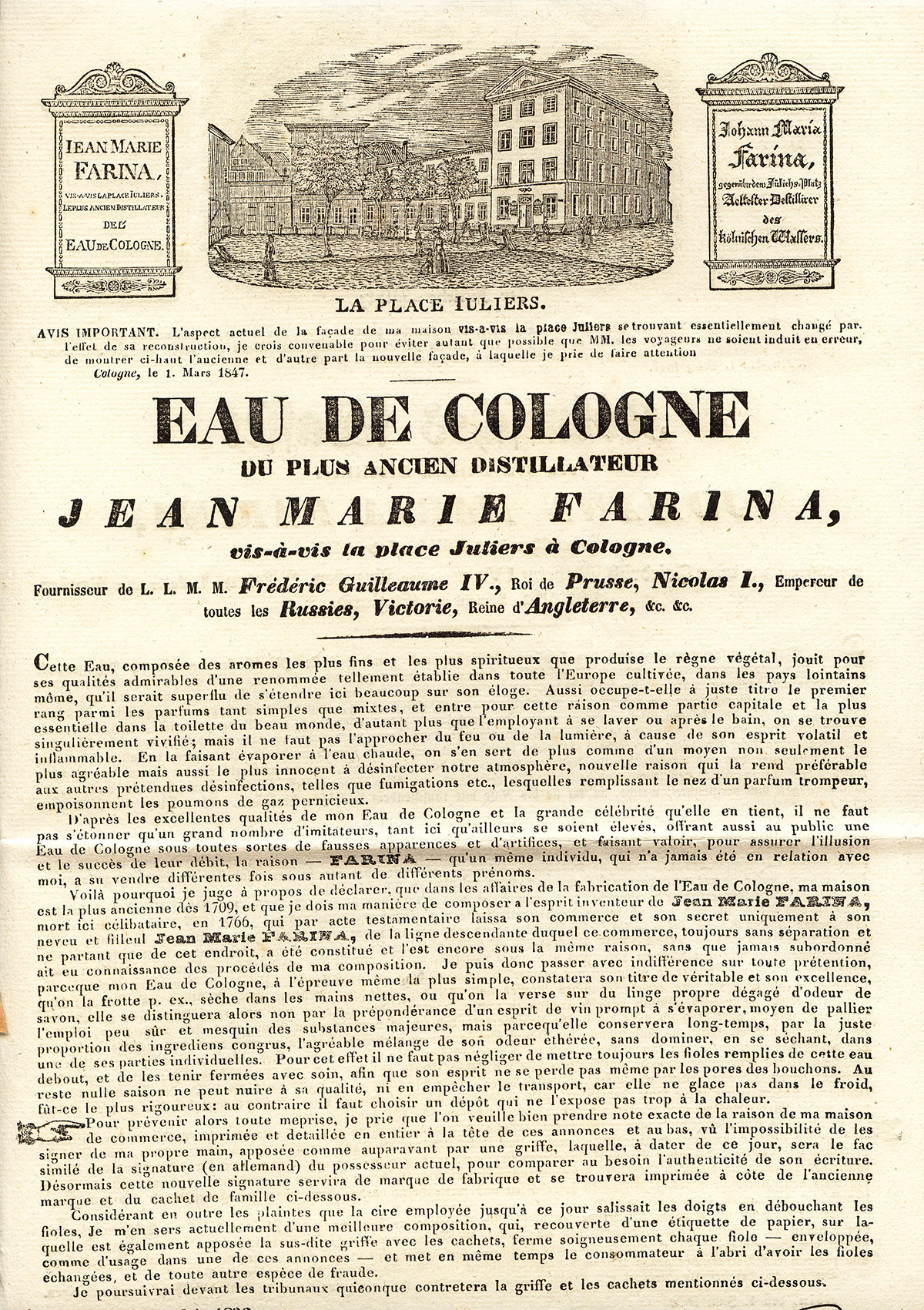
The “Acqua Mirabilis” as it was first named quickly met with success as it was understood that it was aptly named. When it was marketed in France under the term “Eau Admirable” by Jean-Marie Farina (1685 – 1766), the latter was not stingy with details announcing in an 18th century prospectus that “if we wanted to do the detail of all the pains with which this water is suitable for, it should be necessary to do the detail of all the infirmities to which the human body is subject.” This is a postulate that does not lack panache or temerity. And Farina went on to enumerate the various affections with which the Cologne overcome: apoplexy, migraine, eye pain, scurvy, gout, cuts and abrasions, paralysis, and that of man as well as animal! It also teaches the different ways in the 19th century to use this water: ingesting by pouring a few drops in wine or broth, apply it as a compress on damp cotton and especially rubbing the body regularly and especially when leaving the bath “in the time that the pores are open“.
The freshness it provided and the active principles that made it undoubtedly brought immediate relief to anyone who used it, but perhaps Farina was a little too confident in saying that his water, as delicious as it is, overcoming all the sickness. Moreover the Cologne was no longer in the category of drugs since the decree of 18th August 1810, which should not displease the Emperor who, according to Emmanuel de Las Cases (1766 – 1842), “does not believe in medicine or its remedies, of which he made no use […] He defends the thesis that it is better to allow nature to be done instead of encumbering it with remedies “. However, Cologne is the result of a pharmacological and medical reflection.
[thrive_leads id=’74591′]
Eau de Cologne: Medicine Before Cosmetics
In the Middle Ages and until the beginning of modern times, air quality (dry, wet, cold or hot) was considered the sole cause of disease. The scents of spice, herbs and flowers were intended to balance the body: each air quality matched assemblages of scents to prevent disease. Carried in pomander or mixed with vinegar, herbs, spices, barks, and flowers were considered remedies before being considered as cosmetics. The use of Cologne inherits this tradition from the rich therapeutic active principles that compose it. Formulated with natural essential oils, it is not far from our contemporary aromatherapy practices.
A History of Cologne
From Italian monastery to society Parisian boutiques, Cologne had a European fortune: its creator’s audacity plus vicissitudes of royal wars drew the conquest of this fragrance in all courts of Europe. Like its most fervent adept, the Emperor Napoleon I.
From Tuscany to Northern Europe.
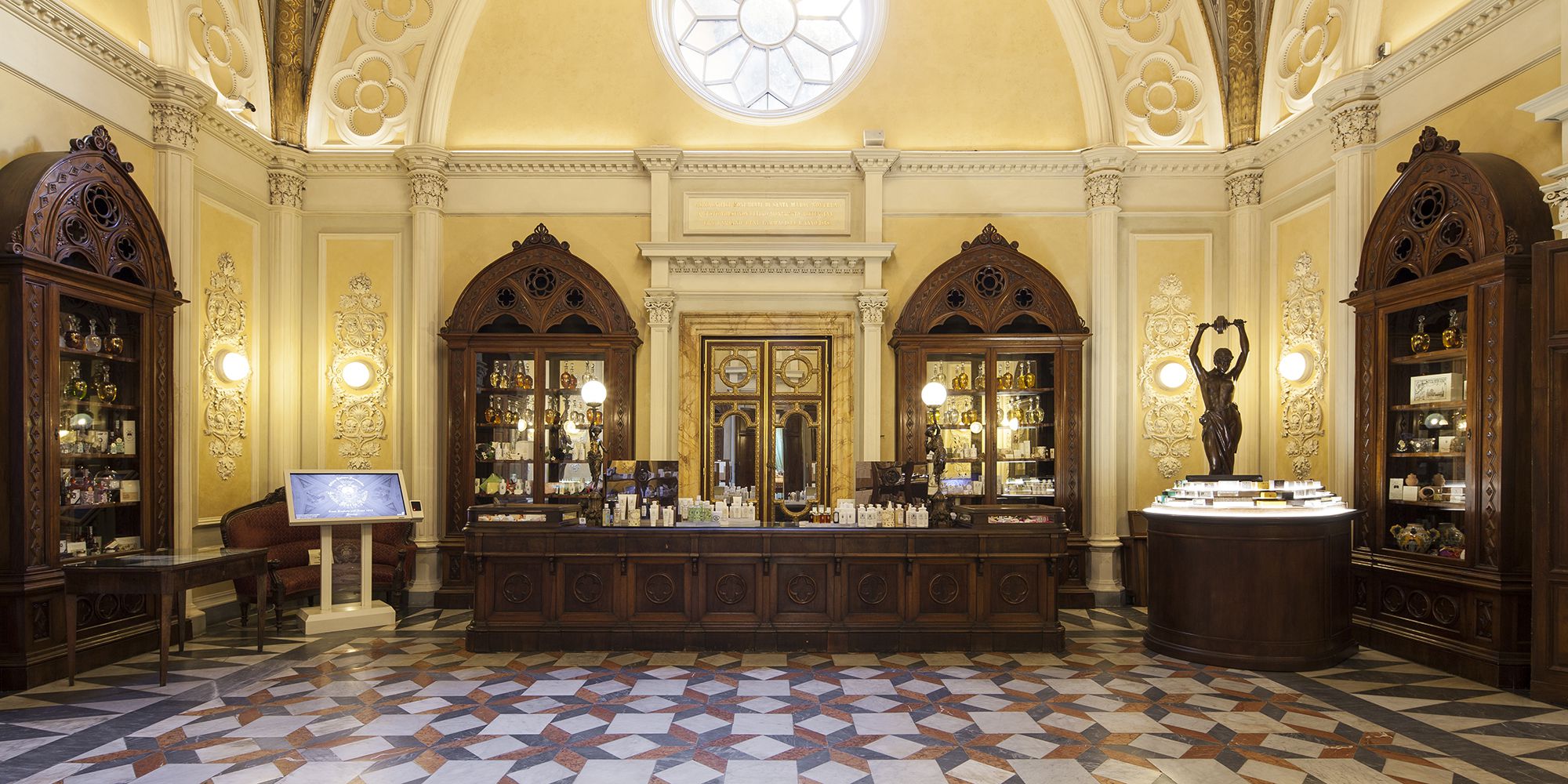
Bien naïf celui qui porterait sur l’eau de Cologne un regard complaisant ; comme souvent l’histoire est bien plus riche qu’il n’y paraît. Elle débute à Florence, dans le prospère XVIe siècle toscan où règne la maison Médicis. À deux pas de la basilique Santa Maria Novella, un couvent de Dominicains dispose d’un jardin de plantes médicinales à partir duquel les frères excellent dans l’élaboration d’essences, de potions, de pommades et de baumes.
Naïve, one who would take a complacent look at the cologne; as often History is much richer than it seems. It begins in Florence, in the prosperous 18th century Tuscan where reigns the Medici family. A stone’s throw from the Santa Maria Novella Basilica, a Dominican convent has a medicinal garden from which the friars excel in the elaboration of essences, potions, ointments and balms.
On the occasion of the departure for France Court of the very refined Catherine de Médicis (1519 – 1589), the Dominican monks elaborate especially for her a perfume thanks to an innovation which will initiate to the birth of Cologne. “Water of the Queen” with bergamot scent is not, as was the custom, made from vinegar but from alcohol. The intuition of holy men will pay off … but not for them! It is Giovanni Paolo Feminis (1660 – 1736) who will benefit from it. Born near Milan, he invented, from Water of the Queen, a hesperidic blend, which he foresaw the success. Our Italian moved to Cologne to commercialise this water he called “Acqua Mirabilis” and which concentrates all the mythical perfumes of an idealized Italy: bergamot, lemon, lavender and rosemary awaken the senses with their freshness and poetically evoke the Tuscan sun. Success is fast and his fortune is made. Rich but not eternal, Giovanni Paolo Feminis bequeaths the secret of his recipe to a member of his family so that his business remains.
[thrive_leads id=’74591′]
« Eau de Cologne » conquers Imperial France.
Let’s wait now for the Seven Years’ War (1756 – 1763) that brought French soldiers to Cologne. As military as he is, a French in a foreign land will forever remain a tourist. Thus the soldiers brought back bottles of Acqua Mirabilis in their kit. Cologne seduces Paris and it is all (the wealthier) France which hastens to get some. Jean-Marie Farina (1685 – 1766), nephew of Feminis, renames the Acqua Mirabilis in “Eau Admirable” and is proud to count Bonaparte among its most loyal customers. Countless colognes then flood the market and fierce competition triggers a lawsuit in Cologne at the beginning of the 20th century to determine the paternity of the Cologne. The Supreme Court of the Empire will decide, after tedious research, in favor of Giovanni Paolo Feminis.
In the end, it is no surprise that Napoleon found in this water a perfume very suitable for him. From the scents of his native Corsica to those of the nearby Tuscany, there is less distance than between Ajaccio and Paris. It will still have taken a voluntary expatriation and a war so that the meeting between the fragrance and the Emperor could take place. A proof if necessary that the essential always returns within our reach.